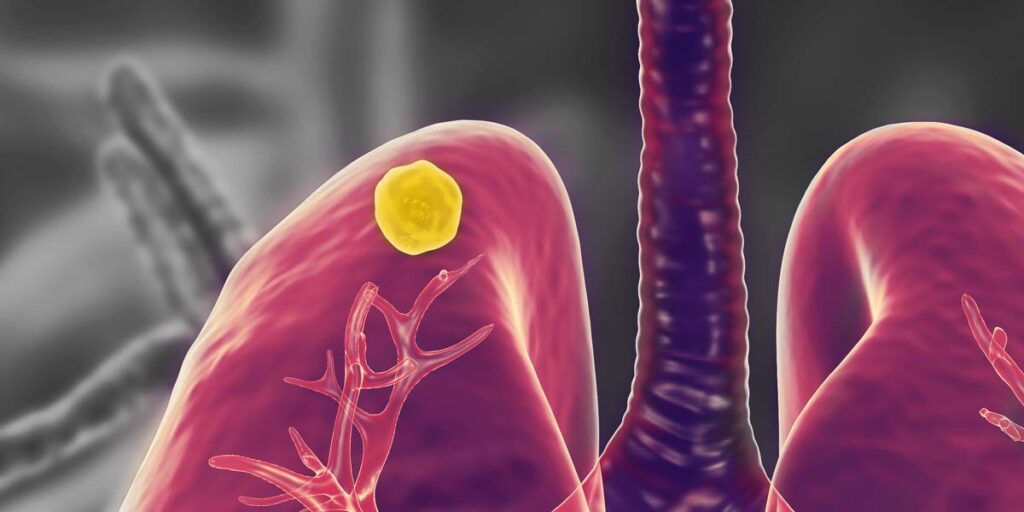
Lung nodules (pulmonary nodules) are abnormal masses that develop in one or both lungs. On a CT scan or chest X-ray, lung nodules—which are denser than normal lung tissue—will appear as white spots or shadows. Some lung nodules are smaller than a pencil eraser, while others can be the size of a golf ball or larger.
What Causes Lung Nodules?
Lung nodules are typically caused by irritants, scar tissue or past infections. In rare occasions, a lung nodule can be malignant lung cancer or later develop into cancer.
Thankfully, most lung nodules are harmless and don’t cause any symptoms. According to the American Thoracic Society, up to 95% of lung nodules turn out to be noncancerous. Your physician will closely monitor lung nodules for any changes.
Is a Lung Nodule Cancer? How Doctors Decide
Most lung nodules are not cancer, but only your doctor can confirm that for your specific case. A doctor will take several steps to decide if a lung nodule is cancerous or not. Your doctor will:
- Assess the appearance of the lung nodule. Your doctor will look at the size, shape and location of the nodule. Nodule size is a key factor in determining the probability of cancer. Most small nodules (less than 1/2 inch) are not lung cancer.
- Evaluate your risk factors. Your lifestyle habits and medical history can tell your healthcare team more about your risk for cancer. Diagnosing cancer will start with a detailed risk assessment.
- Request additional imaging tests. You may need to have more CT scans to see if the nodule changes. Nodule growth rate can be a warning sign of lung cancer. If the nodule remains the same for two years, it’s probably not cancer and usually safe to stop watching.
- Order a biopsy. Most people with lung nodules don’t need a biopsy. But if the nodule has grown or has concerning features, your physician will send you to a lung or cancer specialist for a biopsy. During the biopsy, the provider will pass a long, thin tube down your throat to get a sample of the nodule. Alternatively, your provider will guide a needle through the skin of the chest wall to obtain a sample. If the nodule can’t be reached through the throat or with a needle, surgery may be necessary to remove the nodule and parts of the surrounding lung tissue. After a biopsy, a pathologist will check the tissue sample for cancer, infection, scar tissue or other lung problems.
Lung Nodule Size: What the Numbers Mean
Nodule size is one of the first things your doctor looks at, and it’s also one of the most-searched questions patients have after seeing a report. In general, smaller nodules (under about 1/2 inch, or 8–10 millimeters) are far less likely to be cancerous, while larger nodules or ones that grow over time carry a higher probability and are watched more closely. Your radiologist’s report will note the exact size in millimeters so your doctor can track any change from scan to scan; this is why follow-up imaging, not size alone, is usually the deciding factor.
What Are the Risk Factors for Lung Cancer?
Certain factors increase your risk of having lung cancer. If any apply to you, your doctor may address lung nodules in a more aggressive way. Your doctor will consider these factors:
- Chronic lung disease
- History of smoking (or if you currently smoke)
- Exposure to dusts, metals and fumes that have been linked to cancer
- Older age
- Personal or family history of lung cancer
- Secondhand smoke exposure
If you’re between 50 and 77 and have a significant smoking history, you may also be eligible for annual low-dose CT lung cancer screening, even without symptoms. Learn more about low-dose CT lung cancer screening and whether you qualify.
How Does a CT Scan Reveal Cancerous Lung Nodules?
A biopsy is needed to formally diagnose a cancerous nodule. However, imaging tests, such as CT scans, are the first step to find suspicious areas that may be cancer.
CT scans take images from different angles of structures inside the body. After the exam, a radiologist can view single pictures or a stack, which creates a 3D view. This gives your physician a detailed look at abnormal masses in the lungs.
Many radiologists use the Lung-RADS® scoring system to categorize lung nodules found on a screening CT and recommend next steps, read our guide to understanding your Lung-RADS score.
Choose American Health Imaging for CT scans
Your doctor may want to continue monitoring lung nodules for any changes. If so, he or she may automatically refer you to the radiology department located in the hospital. But did you know this isn’t your only option for imaging?
American Health Imaging (AHI) offers a streamlined patient experience that allows you to avoid the complex hospital system. AHI is equipped with the most modern imaging technology innovations, including the Siemens 64-slice CT system, that allows for precise and reliable imaging studies for lung nodules and other lung cancer screenings. Costs for these imaging services are up to 60% less than hospital imaging, and AHI is in-network with 99% of major insurance plans. Most patients can get a same-day appointment, and results are available through our Scanslated® platform, meaning no waiting on the hospital system to share your images.
Fellowship-trained, subspecialty radiologists will provide your doctor with a written report of your exam and copies of images to review.* Request an appointment today.
CT scans don’t only detect lung nodules. Learn more about what CT scans can help your physician find.
Common Questions About Lung Nodules and Cancer
Nodules smaller than about 1/2 inch (8–10 millimeters) are less likely to be cancerous. Larger nodules, or nodules that grow on follow-up scans, are watched more closely and may need additional testing.
Most lung nodules stay benign. Up to 95% turn out to be noncancerous, but your physician will monitor any nodule for changes in size or shape over time.
Follow-up timing depends on the nodule's size and your personal risk factors. If a nodule stays unchanged for about two years, it's usually considered safe to stop monitoring.
Lung-RADS is a standardized scoring system radiologists use to categorize nodules found on a lung cancer screening CT and recommend next steps, such as routine follow-up or additional imaging.