
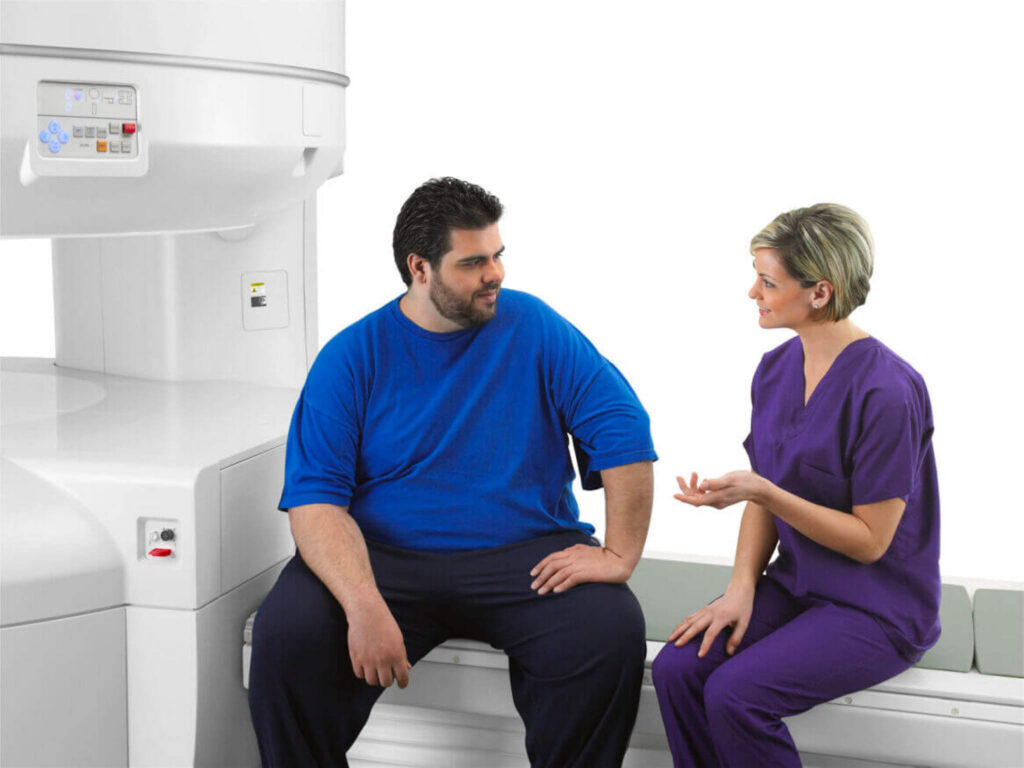
Open MRI Imaging

What is an Open MRI?

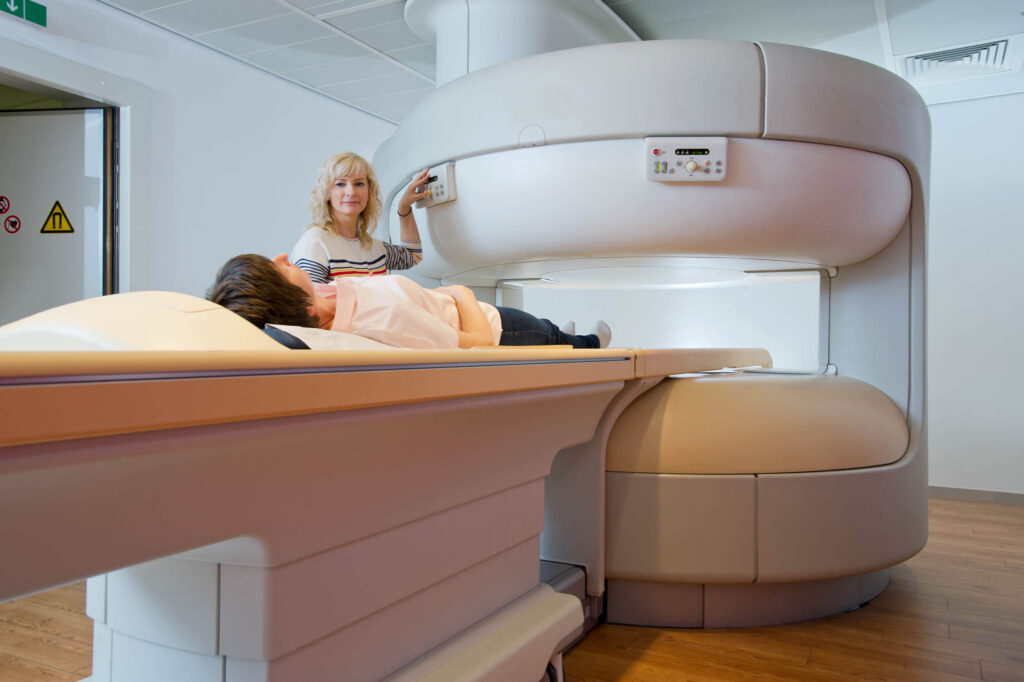
Open MRI (Magnetic Resonance Imaging) is a non-invasive medical imaging test that uses the same powerful magnetic technology as traditional MRI machines, but with a more open, spacious design. Unlike conventional closed-bore MRI machines, where patients must lie inside a narrow tube, open MRI systems feature magnets positioned above and below you, or on either side, leaving the front and sides completely open. This design eliminates the enclosed tunnel and helps you feel more comfortable during your scan.

Open MRI scans produce the same high-quality, detailed images of your organs, soft tissues, bones, and internal structures without radiation, making them ideal for patients who experience:

  • Claustrophobia or severe anxiety
  • Difficulty lying flat due to back pain or breathing problems
  • Discomfort in confined spaces
  • Need for weight-bearing or positional imaging
  • Body size limitations with traditional MRI machines

Open MRI Services at American Health Imaging

American Health Imaging is in-network with 99% of insurance plans and offers open MRI services up to 60% less than hospital-based imaging.

Open MRI Imaging Centers Near You

Find convenient open MRI imaging at select American Health Imaging centers near you. We offer same-day and next-day appointments with extended hours and weekend availability to match your schedule and needs.

Find Your Nearest Open MRI Imaging Center

What is an Open MRI used for?

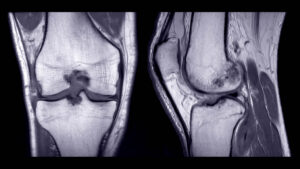
An open MRI provides the same diagnostic capabilities as traditional MRI but in a more comfortable, anxiety-free environment. Doctors use open MRI to diagnose tumors, injuries, infections, neurological disorders, joint problems, and monitor disease progression—all without radiation exposure.

Open MRI is particularly valuable when:

  • Patients experience severe claustrophobia or panic attacks in enclosed spaces
  • Traditional MRI is physically impossible due to patient size or mobility limitations
  • Imaging must be performed in weight-bearing positions (standing or sitting) to diagnose spinal or joint problems accurately
  • Patients have breathing difficulties (COPD, asthma) that worsen when lying flat
  • Children or patients with special needs require a less intimidating imaging environment

Common Open MRI Scans and Uses:

  • Brain and Spine (cervical, thoracic, lumbar)
  • Joints and Muscles (knee, hip, shoulder, wrist, ankle)
  • Abdomen and Pelvis
  • Chest (when lying flat is difficult)
  • Extremities (arms, legs, hands, feet)
  • Weight-bearing spine studies
  • Functional joint imaging (standing, sitting, or bending positions)

Types of Open MRI Scans We Offer

A 1.2T High Field Open MRI is a type of Open MRI scanner that has a strong magnet (1.2 Tesla) and an open design, making it more comfortable for people who feel claustrophobic or have a larger body. The Open MRI has an open front and sides designed to provide increased comfort. The “high field” means it has a stronger magnetic field than some other MRI machines, which helps in getting more accurate images.

A 1.5T High Field MRI is a medical imaging machine that uses a strong magnetic field (1.5 Tesla) to create clear and detailed pictures of the inside of your body. The “high field” means it has a stronger magnetic field than some other MRI machines, which helps in getting more accurate images.

A 1.5T Wide Bore MRI is a type of medical imaging machine that uses a strong magnetic field (1.5 Tesla) to take detailed pictures of the inside of your body. The “wide bore” part means the opening of the machine is larger at 27 ½” wide, making it more comfortable for people who feel anxious or are larger in size. Many of our 1.5T Wide Bore MRIs feature faster scanning technology to reduce most exams to 15 minutes.

A 16-slice CT scanner is a medical imaging machine that takes detailed X-ray pictures of your body in thin slices, which are then combined to create a complete image. The “16-slice” part means it can capture 16 slices of images at once, allowing for faster and more detailed scans.

3D mammography, or tomosynthesis, is an advanced x-ray technology that takes multiple images of breast tissue to create a 3-dimensional picture of the breast. It differs from traditional mammography in that traditional mammography yields only a single image. A 3D image of the breast allows for better assessment of masses and reduces the likelihood of a false positive or an unnecessary biopsy.

A 3T MRI is a medical imaging machine that uses an even stronger magnetic field (3 Tesla) to take very detailed pictures of the inside of your body. Because of its high strength, it can capture clearer images and is often used for more complex scans. Often used for prostates and different types of brain imaging. The “wide bore” part means the opening of the machine is larger at 27 ½” wide, making it more comfortable for people who feel anxious or are larger in size.

A 64-slice CT scanner is a medical imaging machine that takes very detailed X-ray pictures of your body by capturing 64 slices of images at once. This allows for faster scans and even more detailed images, which is useful for diagnosing complex conditions. Our 64-slice CT features innovative technology that automates dose according to your size, weight, and anatomy, providing high-quality images with minimal radiation.

ABUS Breast Cancer Screening uses sound waves to create 3D pictures of the breast tissue. ABUS breast cancer screening technology is specifically developed and FDA-approved for women with dense breast tissue.

An arthrogram visualizes the inside of a joint, such as the shoulder, knee, hip, or wrist. A contrast dye is injected into the joint to make the joint structures, including ligaments, tendons, cartilage, and the joint capsule, more visible on X-ray or MRI images.

Coronary Calcium CT – also called Cardiac Scoring – measures calcified (hard) plaque inside the arteries that can grow and restrict blood flow to the muscles of the heart identifying potential Coronary Artery Disease (CAD) before you have symptoms.

A DEXA scan is a medical imaging technique used to measure bone mineral density. It is commonly performed to diagnose osteoporosis or assess the risk of developing fractures as we age.

Diffusion Tensor Imaging (DTI) is a special type of MRI technique that helps doctors see the pathways of nerve fibers in the brain. By looking at these images, doctors can better understand how the brain’s wiring works and diagnose conditions like brain injuries, tumors, or diseases that affect these connections.

Faster scanning MRI technology reduces the time patients spend on the table for scans by up to 50% to an average scan time of less than 15 minutes providing a more comfortable imaging experience for anxious patients or anyone in pain. AI technology delivers high quality images with reduced motion artifacts and noise distortions for the diagnostic insights providers need to determine next steps in patient care.

Fluoroscopy uses injected contrast dye and an X-Ray machine to take a continuous series of X-rays instead of individual snapshots. It is most commonly used to evaluate parts of your body that are moving in order to create a short video of your body system in motion. It is particularly useful for observing the digestive, urinary, respiratory, and reproductive systems and their functioning.

A screening mammography is a specialized X-ray of the breasts that takes images from different angles. These images can reveal abnormalities in breast tissues. This exam is annually recommended for all women over the age of 40.

Our MRI machines use a powerful magnetic field, radio waves, and a computer to generate detailed images of organs, tissues, bones, and other structures inside the body. With a larger bore or tunnel-like opening compared to traditional MRI machines, our wide-bore MRI provides high quality images without compromising patient comfort.

Our MRI machines use a powerful magnetic field, radio waves, and a computer to generate detailed images of organs, tissues, bones, and other structures inside the body. With a larger bore or tunnel-like opening compared to traditional MRI machines, our wide-bore MRI provides high quality images without compromising patient comfort.

Myelogram imaging is used to evaluate the spinal cord, nerve roots, and surrounding structures in the spine with an injectable contrast dye to enhance the visibility of the spinal cord and nerves on X-ray images.

Specialty post processing technology used for brain MRI to assess brain volume and atrophy for neurological diseases including dementia, Alzheimers, seizures, MS lesions and Traumatic Brain Injuries.

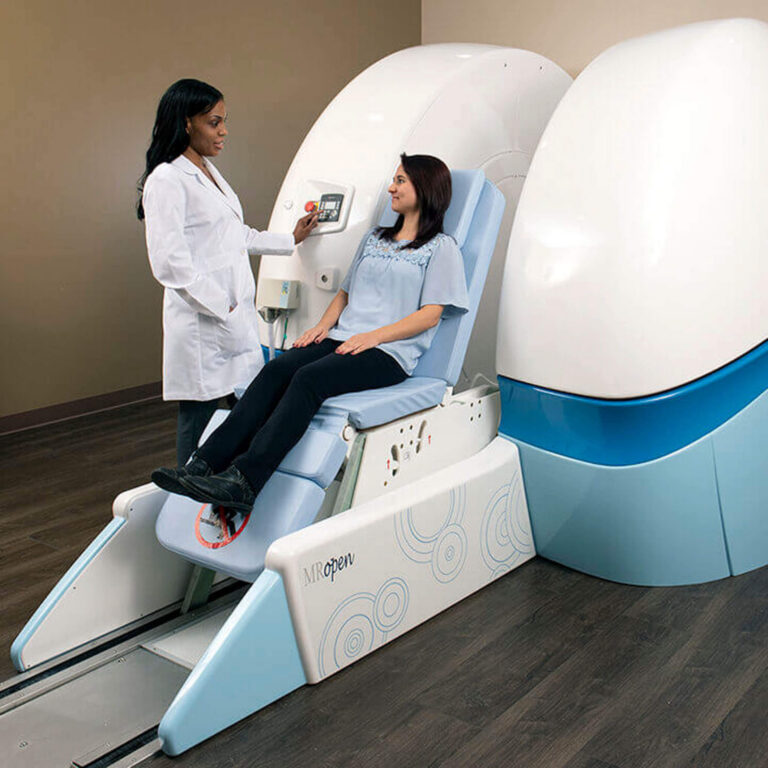
The Open Upright MRI, also known as a stand-up MRI, is the only MRI scanner able to scan you in multiple positions, including sitting, standing, bending (for flexion and extension) or lying down. This unique MRI provides natural weight-bearing imaging and is helpful for your doctor to diagnose the area where you experience pain. The Open Upright MRI is open in front of you, behind you, and above you. This open design may be more comfortable for people who feel anxious or are larger in size.

A PET/CT (Positron emission tomography) is a non-invasive exam that uses small amounts of radioactive materials called radiotracers to reveal how internal organs are functioning. The scan takes about 60 minutes and images are captured via CT as your body processes the radioactive material. This offers great insight into the root of the disease process or the source of symptoms.

What to Expect During Your Open MRI Appointment

During your open MRI scan, you’ll be positioned between the magnets—either lying down, sitting, or standing, depending on the exam and the machine type available. You’ll never be enclosed in a tunnel, and you’ll have clear sight lines around you throughout the procedure. Our compassionate imaging techs will guide you through every step and ensure your comfort.

Most open MRI scans take 30-60 minutes, though this can vary based on the body area being examined. The machine makes rhythmic thumping and clicking sounds during imaging (completely normal), and we’ll provide headphones with music or earplugs for your comfort. Some exams may require contrast dye through an IV, depending on your doctor’s orders.

Key differences with Open MRI machines:

  • No enclosed tunnel—completely open on the sides or front
  • More space and natural lighting reduce anxiety
  • Ability to see out and maintain a visual connection with the room
  • Option to have a family member nearby for support
  • Some locations offer sitting or standing positions for greater comfort

Why Choose American Health Imaging for Your Open MRI

American Health Imaging (AHI) is in-network with 99% of insurance plans for open MRI imaging and offers compassionate care combined with state-of-the-art technology for accuracy and comfort.

  • Significant cost savings up to 60% compared to hospital open MRI pricing
  • Multiple open MRI options, including traditional open MRI and multi-position systems that allow sitting, standing, or lying down
  • Claustrophobia-friendly environment with a completely open design eliminates the enclosed feeling
  • Open MRI exams are read by board-certified, subspecialty radiologists for accurate interpretations you and your doctor can rely on
  • High weight capacity with systems accommodating patients up to 500+ lbs
  • With a 97% patient satisfaction score, patients love our understanding staff and anxiety-free experience

Your health matters, and so does your time. That’s why we offer same-day and next-day appointments, extended hours, and weekend availability at convenient locations across the Southeast.

Schedule Your Open MRI Scan Today

Scheduling your MRI scan with American Health Imaging is made easy in just a few steps:

  1. Get a referral from your doctor (required for insurance coverage)
  2. Choose your location from our centers across Alabama, Georgia, Beaumont, TX, San Antonio, TX, and South Carolina.
  3. Schedule your appointment online or by phone—same-day slots are often available
  4. Verify insurance coverage—we’ll handle pre-approval and certification

Common Questions About Open MRI Scans

What is an open MRI scan?

An open MRI scan (Magnetic Resonance Imaging) is a safe, painless medical imaging test that uses the same powerful magnetic technology as traditional MRI machines, but with a more open, spacious design. Instead of lying inside a narrow tube, open MRI systems feature magnets positioned above and below you, or on either side, leaving the front and sides completely open.

Open MRI helps doctors diagnose:
• Tumors and injuries
• Neurological disorders
• Joint problems
• Spine conditions
• Disease progression

Ideal for patients who experience:
• Claustrophobia or severe anxiety
• Difficulty lying flat due to back pain or breathing problems
• Discomfort in confined spaces
• Body size limitations with traditional MRI machines

Why did my doctor order an open MRI scan?

Your doctor may have ordered an open MRI for several important reasons related to both your comfort and diagnostic needs.

Patient comfort and completion:
• Severe claustrophobia or anxiety about enclosed spaces
• Inability to complete a traditional MRI due to panic
• Physical limitations that make lying in a narrow tube difficult
• Body size exceeding traditional MRI capacity

Diagnostic advantages:
• Weight-bearing imaging (standing or sitting) needed to evaluate spine or joints
• Symptoms that only appear in certain positions
• Breathing difficulties that worsen when lying flat
• Need to evaluate how the body functions in different positions

Open MRI provides the diagnostic images your doctor needs while ensuring you can complete the exam comfortably.

Do I need a referral for an open MRI scan?

Yes, you need a referral (also called a doctor’s order or prescription) to get an open MRI scan.

What your referral does:
• Specifies which body area needs to be scanned
• Is required for insurance coverage
• Ensures the correct MRI exam is performed

Once your doctor sends the order to American Health Imaging, we’ll contact you to schedule your appointment and verify your insurance coverage.

Schedule your MRI exam:
https://americanhealthimaging.com/request-appointment/

View imaging centers:
https://americanhealthimaging.com/location/

How do I schedule a same-day open MRI scan?

Scheduling a same-day open MRI scan at American Health Imaging is easy.

Flexible scheduling options:
• Call one of our imaging centers or request an appointment online
• Same-day appointments at most locations
• Extended evening and weekend hours
• Next-day appointments available

Important: When you call to schedule, let us know you prefer an open MRI so we can direct you to a location with the appropriate technology.

What imaging centers near me offer an open MRI scan?

American Health Imaging offers open MRI at select convenient locations throughout the Southeast.

Open MRI with multi-position capability (sit, stand, lie down):
• Birmingham, Alabama
• Atlanta, Georgia
• Decatur, Georgia
• San Antonio, Texas

Open MRI with stand or lie-down options:
• West Columbia, South Carolina

Traditional open MRI (open on all sides):
• Beaumont, Texas

All open MRI centers offer same-day and next-day appointments.

View all imaging centers:
https://americanhealthimaging.com/location/

What does an open MRI scan diagnose?

Open MRI can diagnose the same wide range of conditions as traditional MRI, providing detailed images without radiation exposure.

Spine and neck conditions:
• Herniated or bulging discs
• Spinal stenosis
• Degenerative disc disease
• Spinal tumors
• Nerve compression
• Spinal cord injuries

Joint conditions:
• Torn ligaments (ACL, MCL, rotator cuff)
• Torn meniscus
• Arthritis and bone spurs
• Cartilage damage
• Joint inflammation

Brain and neurological conditions:
• Brain tumors
• Multiple sclerosis
• Stroke and aneurysms
• Infections

Other conditions:
• Abdominal and pelvic abnormalities
• Soft tissue masses and muscle tears
• Blood vessel abnormalities
• Cancer staging and monitoring

What are the most common types of open MRI scans?

American Health Imaging offers a comprehensive range of open MRI scans.

Most common scans:
• Brain and spine imaging
• Joint and muscle imaging (knee, hip, shoulder, wrist, ankle)
• Abdomen and pelvis imaging
• Chest imaging when lying flat is difficult
• Extremity imaging (arms, legs, hands, feet)

Specialized services:
• Weight-bearing spine studies
• Functional joint imaging in standing or sitting positions

Your doctor will determine the best exam for your condition.

How should I prepare for an open MRI scan?

Preparing for an open MRI scan is simple.

Before your appointment:
• Arrive 15 minutes early
• Wear loose clothing without metal
• No fasting or medication changes required

Remove all metal objects:
• Jewelry, watches, hairpins
• Hearing aids, belts, keys, phones

Tell the technologist if you:
• Have implanted medical devices
• Are pregnant or might be pregnant
• Have metal in your body
• Have anxiety or need assistance positioning

What should I expect during an open MRI scan?

During your open MRI scan, you’ll be positioned between the magnets—lying down, sitting, or standing depending on the exam.

What happens:
• Preparation and metal removal
• Comfortable positioning
• Blankets, pillows, and headphones provided
• Loud but normal machine sounds
• Ability to communicate with the technologist
• Option for a family member nearby

Key benefits:
• No enclosed tunnel
• Open sides or front
• Reduced anxiety and improved comfort

What happens after my open MRI scan is complete?

After your open MRI scan, you can resume normal activities immediately.

After your scan:
• Drive, eat, and work as usual
• If sedated, arrange transportation

Getting your results:
• Images reviewed within 24–48 hours
• Report sent to your doctor
• Patient-friendly report sent via text

When will I get my open MRI scan results back?

Your doctor typically receives results within 24–48 hours.

You will receive:
• A text message with a link to your imaging report
• Easy-to-understand explanations
• Anatomical diagrams

How accurate is an open MRI scan?

Open MRI provides high-quality, accurate diagnostic images for most medical conditions.

Why open MRI is accurate:
• Modern imaging technology
• Appropriate for most diagnostic needs
• Images interpreted by fellowship-trained radiologists

Closed MRI may be preferred for very specific complex conditions, but for most patients, open MRI offers excellent diagnostic quality with improved comfort.

How long does an open MRI scan take?

Most open MRI scans take 30–60 minutes.

Total appointment time:
• 45–75 minutes including check-in

Scan time varies by body part and exam complexity.

How much does an open MRI scan cost?

The cost of an open MRI scan varies by body part and whether contrast is needed.

Typical pricing:
• Hospital open MRI: $2,500–$4,000
• American Health Imaging self-pay: $800–$1,600

We are in-network with 99% of insurance plans and verify coverage before your appointment.

Will my insurance cover an open MRI scan?

Most insurance plans cover open MRI scans when medically necessary.

American Health Imaging benefits:
• In-network with 99% of insurance plans
• Lower out-of-pocket costs
• We handle insurance verification and authorization

Self-pay options are available for uninsured or high-deductible plans.

What’s the difference between an open MRI and a closed MRI?

Closed MRI:
• Narrow tube
• Fully enclosed
• Higher field strength
• Faster scan times

Open MRI:
• No tunnel
• Open sides or front
• Reduced claustrophobia
• Higher weight capacity
• Sitting or standing options at select locations

Both provide diagnostic-quality images for most conditions.

What does an open MRI machine look like?

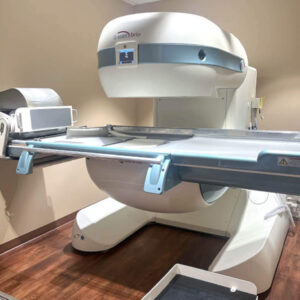
Open MRI machines have two large flat magnets positioned above and below you or on either side, creating an open, spacious environment.

Features:
• No enclosed tube
• Clear sight lines
• Less intimidating appearance
• Some systems allow sitting or standing

Is an open MRI safe for claustrophobic patients?

Yes. Open MRI is specifically designed for patients with claustrophobia or anxiety.

Why it helps:
• Eliminates the enclosed tunnel
• Reduces panic and anxiety
• Allows visual connection with the room
• Family member may stay nearby

Many patients who could not complete a traditional MRI successfully complete an open MRI.

Can I get an open MRI if I’m overweight or have a larger body size?

Yes. Open MRI systems are ideal for patients with larger body sizes.

Advantages:
• Higher weight capacity (up to 500+ lbs)
• More spacious positioning
• No narrow bore

Open MRI is often the best option when traditional MRI is not possible.

What’s the difference between a multi-position open MRI and a traditional open MRI?

Traditional open MRI:
• Lying-down imaging
• Open design
• Great for claustrophobic patients

Multi-position open MRI:
• Sitting, standing, or bending positions
• Shows spine and joints under natural weight
• Ideal for symptoms that occur only when upright

Your doctor will determine which system is best.

Can children get open MRI scans?

Yes. Open MRI is often ideal for children.

Benefits:
• Less intimidating environment
• Parents may stay nearby
• Reduced need for sedation

Very young children may still require sedation.

Can I get an open MRI if I have metal in my body?

It depends on the type of metal.

Generally safe:
• Most surgical screws, plates, and joint replacements
• Dental fillings and crowns
• Most IUDs and heart valves

May not be safe:
• Pacemakers or ICDs
• Cochlear implants
• Certain aneurysm clips
• Metal fragments in the eyes

Always inform the technologist of any implants.

What if I still feel anxious about open MRI?

If you feel anxious, several strategies can help.

Before your appointment:
• Ask your doctor about anti-anxiety medication
• Visit the imaging center beforehand
• Bring a friend or family member

During your scan:
• Communicate with the technologist
• Listen to music
• Practice breathing techniques
• Use the call button if needed

Most patients find open MRI much easier than expected.

Patient Reviews and Testimonials

With a 97% satisfaction score, we’re proud to deliver compassionate care, clear communication, and imaging you can count on.

Have you visited a American Health Imaging Center lately?

Your feedback helps us continue providing exceptional care. If you’ve had a recent experience at one of our locations, we’d love to hear from you.

Open MRI Articles and Resources

Do you need to schedule a Open MRI?

American Health Imaging offers same-day and next-day appointment options to make getting an imaging scan convenient. Get a referral from your doctor, find the American Health Imaging center closest to you, and then call to schedule an imaging appointment.