


Cardiac Calcium Scoring

What is Cardiac Calcium Scoring?

Cardiac Calcium Scoring, also called coronary artery calcium (CAC) scoring or heart scan, is a specialized CT scan that measures calcified plaque buildup in the coronary arteries—the blood vessels that supply oxygen to your heart muscle. This quick, non-invasive screening detects atherosclerosis (hardening of the arteries) before symptoms appear, helping predict your risk of heart attack and coronary artery disease. Unlike traditional risk assessments that rely solely on factors like cholesterol and blood pressure, cardiac scoring provides direct visualization of plaque in your arteries, offering a more accurate picture of your actual heart disease risk.

Cardiac Calcium Scoring is particularly valuable for:

  • Early detection of coronary artery disease in asymptomatic patients
  • Risk assessment for people with borderline or intermediate cardiovascular risk
  • Guiding decisions about statin therapy and lifestyle interventions
  • Motivating patients to adopt heart-healthy behaviors
  • Predicting long-term cardiovascular events with greater accuracy than traditional risk factors alone

Cardiac Calcium Scoring Services at American Health Imaging

American Health Imaging offers affordable cardiac calcium scoring for just $199 as a self-pay exam. HSA and FSA funds can be used to pay for this preventive heart screening, making it accessible for those who want to know their true heart disease risk.

Cardiac Calcium Scoring Centers Near You

Find convenient cardiac calcium scoring at American Health Imaging centers in Alabama, Georgia, Texas, Florida, and South Carolina. We offer same-day and next-day appointments with extended hours and weekend availability to fit your busy schedule.

Find Your Nearest Cardiac Scoring Imaging Center

What is Cardiac Calcium Scoring used for?

Cardiac calcium scoring provides critical information that blood tests and physical exams cannot reveal. While cholesterol tests and blood pressure measurements estimate your risk based on statistical models, a calcium score shows the actual amount of plaque already present in your coronary arteries. This makes cardiac scoring particularly valuable when doctors need to determine if preventive medications are necessary, assess patients with conflicting risk factors, or motivate lifestyle changes through concrete evidence of coronary disease. Doctors use cardiac calcium scoring to stratify cardiovascular risk, guide treatment decisions, predict future heart events, and identify high-risk patients who may benefit from aggressive preventive therapy, all without invasive procedures or radiation contrast dye.

Common Cardiac Scoring Uses

The test is considered appropriate for men over age 40 or women over age 50 who are at moderate risk for developing heart disease because of factors such as:

  • Family or personal history of heart disease
  • Past or present tobacco use
  • History of high cholesterol, diabetes or high blood pressure
  • Overweight or obesity
  • High stress levels
  • Inactive or sedentary lifestyle

Types of Cardiac Scoring Scans We Offer

A 1.2T High Field Open MRI is a type of Open MRI scanner that has a strong magnet (1.2 Tesla) and an open design, making it more comfortable for people who feel claustrophobic or have a larger body. The Open MRI has an open front and sides designed to provide increased comfort. The “high field” means it has a stronger magnetic field than some other MRI machines, which helps in getting more accurate images.

A 1.5T High Field MRI is a medical imaging machine that uses a strong magnetic field (1.5 Tesla) to create clear and detailed pictures of the inside of your body. The “high field” means it has a stronger magnetic field than some other MRI machines, which helps in getting more accurate images.

A 1.5T Wide Bore MRI is a type of medical imaging machine that uses a strong magnetic field (1.5 Tesla) to take detailed pictures of the inside of your body. The “wide bore” part means the opening of the machine is larger at 27 ½” wide, making it more comfortable for people who feel anxious or are larger in size. Many of our 1.5T Wide Bore MRIs feature faster scanning technology to reduce most exams to 15 minutes.

A 16-slice CT scanner is a medical imaging machine that takes detailed X-ray pictures of your body in thin slices, which are then combined to create a complete image. The “16-slice” part means it can capture 16 slices of images at once, allowing for faster and more detailed scans.

3D mammography, or tomosynthesis, is an advanced x-ray technology that takes multiple images of breast tissue to create a 3-dimensional picture of the breast. It differs from traditional mammography in that traditional mammography yields only a single image. A 3D image of the breast allows for better assessment of masses and reduces the likelihood of a false positive or an unnecessary biopsy.

A 3T MRI is a medical imaging machine that uses an even stronger magnetic field (3 Tesla) to take very detailed pictures of the inside of your body. Because of its high strength, it can capture clearer images and is often used for more complex scans. Often used for prostates and different types of brain imaging. The “wide bore” part means the opening of the machine is larger at 27 ½” wide, making it more comfortable for people who feel anxious or are larger in size.

A 64-slice CT scanner is a medical imaging machine that takes very detailed X-ray pictures of your body by capturing 64 slices of images at once. This allows for faster scans and even more detailed images, which is useful for diagnosing complex conditions. Our 64-slice CT features innovative technology that automates dose according to your size, weight, and anatomy, providing high-quality images with minimal radiation.

ABUS Breast Cancer Screening uses sound waves to create 3D pictures of the breast tissue. ABUS breast cancer screening technology is specifically developed and FDA-approved for women with dense breast tissue.

An arthrogram visualizes the inside of a joint, such as the shoulder, knee, hip, or wrist. A contrast dye is injected into the joint to make the joint structures, including ligaments, tendons, cartilage, and the joint capsule, more visible on X-ray or MRI images.

Coronary Calcium CT – also called Cardiac Scoring – measures calcified (hard) plaque inside the arteries that can grow and restrict blood flow to the muscles of the heart identifying potential Coronary Artery Disease (CAD) before you have symptoms.

A DEXA scan is a medical imaging technique used to measure bone mineral density. It is commonly performed to diagnose osteoporosis or assess the risk of developing fractures as we age.

Diffusion Tensor Imaging (DTI) is a special type of MRI technique that helps doctors see the pathways of nerve fibers in the brain. By looking at these images, doctors can better understand how the brain’s wiring works and diagnose conditions like brain injuries, tumors, or diseases that affect these connections.

Faster scanning MRI technology reduces the time patients spend on the table for scans by up to 50% to an average scan time of less than 15 minutes providing a more comfortable imaging experience for anxious patients or anyone in pain. AI technology delivers high quality images with reduced motion artifacts and noise distortions for the diagnostic insights providers need to determine next steps in patient care.

Fluoroscopy uses injected contrast dye and an X-Ray machine to take a continuous series of X-rays instead of individual snapshots. It is most commonly used to evaluate parts of your body that are moving in order to create a short video of your body system in motion. It is particularly useful for observing the digestive, urinary, respiratory, and reproductive systems and their functioning.

A screening mammography is a specialized X-ray of the breasts that takes images from different angles. These images can reveal abnormalities in breast tissues. This exam is annually recommended for all women over the age of 40.

Our MRI machines use a powerful magnetic field, radio waves, and a computer to generate detailed images of organs, tissues, bones, and other structures inside the body. With a larger bore or tunnel-like opening compared to traditional MRI machines, our wide-bore MRI provides high quality images without compromising patient comfort.

Our MRI machines use a powerful magnetic field, radio waves, and a computer to generate detailed images of organs, tissues, bones, and other structures inside the body. With a larger bore or tunnel-like opening compared to traditional MRI machines, our wide-bore MRI provides high quality images without compromising patient comfort.

Myelogram imaging is used to evaluate the spinal cord, nerve roots, and surrounding structures in the spine with an injectable contrast dye to enhance the visibility of the spinal cord and nerves on X-ray images.

Specialty post processing technology used for brain MRI to assess brain volume and atrophy for neurological diseases including dementia, Alzheimers, seizures, MS lesions and Traumatic Brain Injuries.

The Open Upright MRI, also known as a stand-up MRI, is the only MRI scanner able to scan you in multiple positions, including sitting, standing, bending (for flexion and extension) or lying down. This unique MRI provides natural weight-bearing imaging and is helpful for your doctor to diagnose the area where you experience pain. The Open Upright MRI is open in front of you, behind you, and above you. This open design may be more comfortable for people who feel anxious or are larger in size.

A PET/CT (Positron emission tomography) is a non-invasive exam that uses small amounts of radioactive materials called radiotracers to reveal how internal organs are functioning. The scan takes about 60 minutes and images are captured via CT as your body processes the radioactive material. This offers great insight into the root of the disease process or the source of symptoms.

What to Expect During Your Cardiac Scoring Appointment

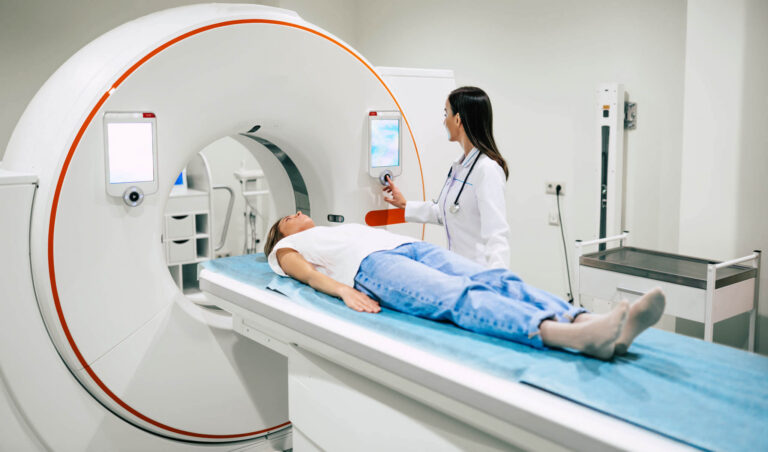
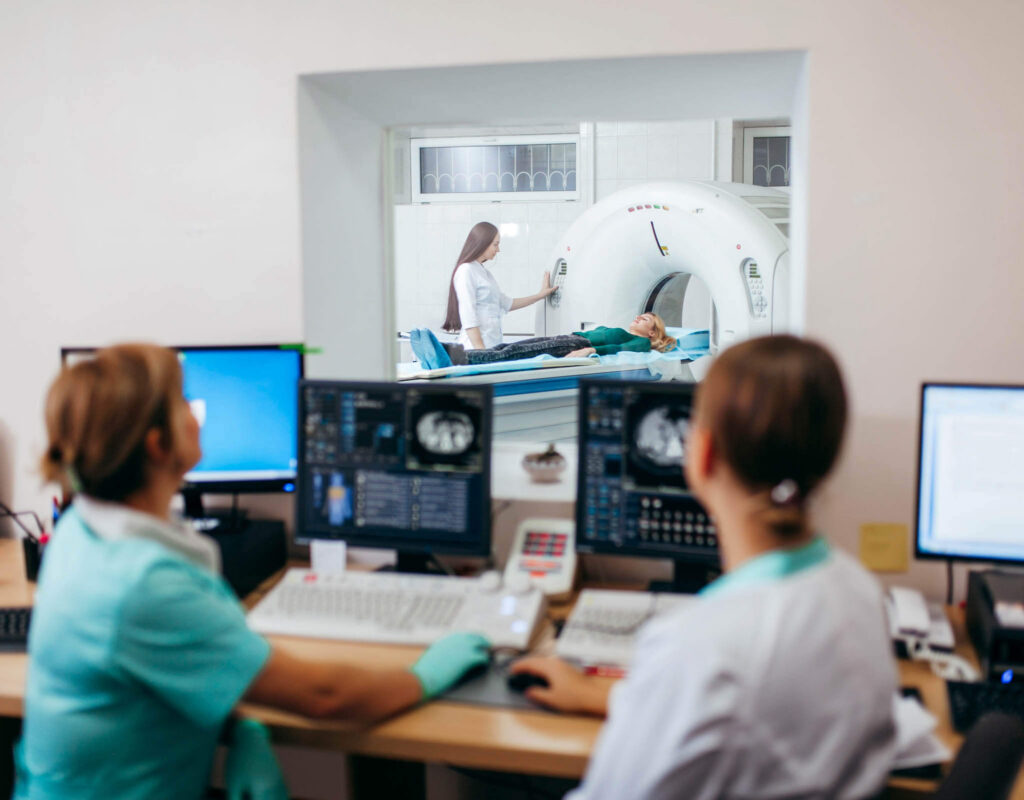
Your cardiac calcium scoring scan is a quick, painless CT exam that usually takes less than 15 minutes from start to finish. You’ll lie comfortably on the scanning table while the CT scanner captures detailed images of your heart and coronary arteries. Small electrodes are placed on your chest to sync the images with your heartbeat, and you may be asked to hold your breath for 10–15 seconds to ensure the clearest results.

There’s no exercise, IV contrast, or injections, just a simple, non‑invasive scan that provides valuable insight into your heart health. You’ll remain fully clothed, and minimal preparation is needed. Throughout the appointment, our technologists will guide you through each step and help you feel at ease during this straightforward screening.

Why Choose American Health Imaging for Your Cardiac Scoring

American Health Imaging offers cardiac calcium scoring for just $199, typically less expensive than hospital-based pricing. This self-pay heart screening is not typically covered by insurance, making our affordable pricing especially valuable for patients who want to know their true cardiovascular risk without breaking the bank.

  • Exceptional value at $199 self-pay
  • Advanced multidetector CT scanners with ECG synchronization for accurate calcium quantification
  • Board-certified, subspecialty radiologists with cardiovascular imaging expertise provide accurate Agatston score calculations
  • Scanslated® patient-friendly reports explain your results in clear, understandable language
  • With a 97% patient satisfaction score, patients appreciate our efficient service and compassionate care
  • HSA and FSA accepted—use your health savings funds for this preventive screening

Your heart health matters, and so does your time. That’s why we offer same-day and next-day appointments, extended hours, and weekend availability at convenient locations across the Southeast.

Schedule Your Cardiac Calcium Scoring Today

Getting started is easy:

  1. Get a physician referral (required)—talk to your doctor about whether cardiac calcium scoring is right for you
  2. Confirm availability at your preferred American Health Imaging location—call ahead, as not all centers offer cardiac scoring
  3. Schedule your appointment online or by phone—same-day slots often available
  4. Payment is $199 self-pay—HSA and FSA accepted, CareCredit® payment plans available

Common Questions About Cardiac Scoring Scans

What is cardiac calcium scoring, and how is it different from other heart tests?

Cardiac calcium scoring (also called coronary artery calcium scoring, CAC scoring, or heart scan) is a specialized CT scan that measures calcified plaque buildup in your coronary arteries, the blood vessels that supply oxygen to your heart muscle. This quick, non-invasive screening detects atherosclerosis (hardening of the arteries) before symptoms appear, helping predict your risk of heart attack and coronary artery disease.

How cardiac calcium scoring works:
• Uses low-dose CT imaging to detect calcium deposits in coronary arteries
• Calculates an Agatston score ranging from 0 (no detectable plaque) to over 1,000 (extensive disease)
• Provides age-, sex-, and race-specific percentile ranking
• Takes just 10-15 minutes with no contrast dye or IV needed

Unlike traditional risk assessments that rely solely on factors like cholesterol and blood pressure, cardiac scoring provides direct visualization of plaque in your arteries, offering a more accurate picture of your actual heart disease risk.

Cardiac calcium scoring is ideal for:
• Early detection of coronary artery disease in asymptomatic patients
• Risk assessment for people with borderline or intermediate cardiovascular risk (10-year risk 5-20%)
• Guiding decisions about statin therapy and lifestyle interventions
• Predicting long-term cardiovascular events with greater accuracy than traditional risk factors alone

Why would my doctor order a cardiac calcium scoring scan?

Your doctor may order cardiac calcium scoring when traditional risk assessment tools do not provide a clear picture of your cardiovascular risk. This commonly occurs in patients with intermediate risk who fall into a gray zone where the benefits of statin therapy or aspirin are uncertain.

Common reasons your doctor ordered this test:

Unclear cardiovascular risk:
• Borderline high cholesterol and uncertainty about taking statins
• Multiple risk factors but unclear overall risk
• Conflicting risk assessments from different calculators
• Younger patients (40–55) with a strong family history of premature heart disease

Treatment decision guidance:
• You stopped taking statins due to side effects and want to reassess disease burden
• Your doctor wants objective evidence to guide treatment intensity
• You are symptom-free but have concerning risk factors

Risk stratification needs:
• Metabolic syndrome or multiple cardiac risk factors
• Chronic inflammatory conditions such as rheumatoid arthritis or lupus
• Family history of premature heart disease

Do I need a referral for a cardiac calcium scoring scan?

Yes, you need a referral (also called a doctor’s order or prescription) to get a cardiac calcium scoring scan at American Health Imaging.

What your referral does:
• Confirms that cardiac calcium scoring is medically appropriate for your age and risk factors
• Is required for scheduling your appointment
• Helps ensure the scan is used for appropriate clinical indications
• Allows your doctor to receive and interpret your results

Once your doctor sends the order to American Health Imaging, we’ll contact you to schedule your appointment and explain the $199 self-pay cost.

Schedule your cardiac scoring scan:
https://americanhealthimaging.com/request-appointment/

How do I schedule a same-day cardiac calcium scoring scan?

Scheduling a same-day cardiac calcium scoring scan at American Health Imaging is easy once you have your doctor’s referral.

Flexible scheduling options:
• Call your preferred American Health Imaging location directly
• Request an appointment online through our website
• Same-day and next-day appointments available at most locations
• Extended evening and weekend hours at select centers

Important: Not all American Health Imaging centers offer cardiac calcium scoring. When scheduling, confirm that your preferred location provides this service.

Payment information:
• Self-pay cost: $199
• HSA and FSA funds accepted
• CareCredit® payment plans available

Schedule your cardiac scoring scan:
https://americanhealthimaging.com/request-appointment/

What imaging centers near me offer a cardiac calcium scoring scan?

American Health Imaging offers cardiac calcium scoring at select locations across Alabama, Georgia, Texas, Florida, and South Carolina.

Because cardiac calcium scoring requires specialized CT equipment and trained cardiovascular imaging radiologists, not all locations offer this service. We recommend calling ahead to confirm availability at your nearest center.

View all imaging centers:
https://americanhealthimaging.com/location/

What does a cardiac calcium scoring scan diagnose?

Cardiac calcium scoring detects and quantifies coronary artery calcification, a marker of atherosclerotic plaque buildup in the arteries supplying your heart muscle. This is the underlying disease process responsible for most heart attacks.

Risk categories:
• Score 0: Very low risk
• Score 1–10: Low risk
• Score 11–100: Mild disease
• Score 101–300: Moderate disease
• Score greater than 400: Extensive disease

Calcium scoring predicts future heart attack risk and overall cardiovascular disease burden but does not detect soft plaque or active blockages.

How should I prepare for a cardiac calcium scoring scan?

Preparing for a cardiac calcium scoring scan requires minimal advance preparation.

Before your appointment:
• No fasting required — eat and drink normally
• Continue all regular medications unless advised otherwise

Day of your appointment:
• Avoid caffeine for 4 hours before the scan
• Avoid smoking for 4 hours before the scan
• Wear comfortable clothing without metal fasteners
• Remove jewelry and metal objects
• Arrive 15 minutes early for paperwork

No IV, contrast dye, exercise, or recovery time is required.

What should I expect during a cardiac calcium scoring scan?

Your cardiac calcium scoring scan is a quick, painless procedure that takes just 10–15 minutes total.

What to expect:
• Simple positioning on the CT scanner
• Brief breath-hold instructions
• No injections or contrast dye
• No physical exertion

Most patients are pleasantly surprised by how fast and easy the exam is compared to stress tests or other heart imaging.

What happens after my cardiac calcium scoring scan is complete?

After your cardiac calcium scoring scan is complete, you can leave immediately and resume all normal activities.

Immediately after your scan:
• Drive yourself home
• Resume eating, working, and exercising
• No activity restrictions or recovery time

Your images will be reviewed by board-certified cardiovascular radiologists, and results will be sent to your referring doctor.

When will I get my cardiac calcium scoring scan results?

Your doctor typically receives the results within a few hours after the report is finalized.

You will receive:
• A text message with a link to your Scanslated® patient-friendly report
• Easy-to-understand explanations of your calcium score
• Information to help guide your next steps

Most patients receive their report within 48 hours.

How long does a cardiac calcium scoring scan take?

The actual scan takes just 10–15 seconds of breath-holding.

Total appointment time:
• Approximately 10–15 minutes from check-in to finish

This makes cardiac calcium scoring one of the fastest and most convenient cardiovascular screening tests available.

Will my insurance cover a cardiac calcium scoring scan?

Most insurance plans, including Medicare, do not currently cover cardiac calcium scoring because it is considered a preventive screening test.

Payment options at American Health Imaging:
• Self-pay price: $199
• HSA and FSA funds accepted
• CareCredit® payment plans available

Many patients find this affordable investment worthwhile for understanding their true heart disease risk.

What is the Agatston score, and what do the numbers mean?

The Agatston score is the standard measurement used to quantify coronary artery calcium.

Score ranges:
• 0: No detectable calcium, very low risk
• 1–10: Minimal plaque
• 11–100: Mild plaque
• 101–300: Moderate plaque burden
• 301–400: Moderately high risk
• Greater than 400: Extensive plaque, high cardiovascular risk

Higher scores indicate a greater likelihood of future cardiovascular events and may require more aggressive preventive treatment.

Who should get a cardiac calcium scoring scan?

Cardiac calcium scoring is best for asymptomatic adults ages 40–75 with intermediate cardiovascular risk and uncertainty about preventive treatment decisions.

Ideal candidates include:
• Patients with borderline or intermediate 10-year risk (5–20%)
• Family history of premature heart disease
• Multiple cardiovascular risk factors
• Patients uncertain about starting statin therapy

It is not recommended for low-risk individuals or patients with known coronary artery disease.

Can I have a cardiac calcium scoring scan if I have a pacemaker or defibrillator?

Yes. Cardiac calcium scoring is generally safe for patients with pacemakers or implantable cardioverter-defibrillators (ICDs). CT scanning does not use magnetic fields and does not interfere with these devices.

What’s the difference between cardiac calcium scoring and coronary CT angiography (CTA)?

Cardiac calcium scoring measures calcified plaque to assess cardiovascular risk in asymptomatic patients and does not require contrast dye.

Coronary CT angiography (CTA):
• Uses IV contrast
• Visualizes coronary arteries directly
• Detects blockages and narrowing
• Has higher radiation exposure

Calcium scoring is best for preventive screening, while CTA is used to evaluate symptoms or known disease.

Can cardiac calcium scoring detect all types of heart disease?

No. Cardiac calcium scoring specifically detects calcified coronary plaque and does not evaluate:
• Soft (non-calcified) plaque
• Heart valve disease
• Arrhythmias
• Cardiomyopathy
• Heart failure

It is best used as a preventive risk-assessment tool rather than a comprehensive heart disease evaluation.


Patient Reviews and Testimonials

With a 97% satisfaction score, we’re proud to deliver compassionate care, clear communication, and imaging you can count on.

Have you visited a American Health Imaging Center lately?

Your feedback helps us continue providing exceptional care. If you’ve had a recent experience at one of our locations, we’d love to hear from you.

Cardiac Scoring Articles and Resources

Do you need to schedule a Cardiac Scoring?

American Health Imaging offers same-day and next-day appointment options to make getting an imaging scan convenient. Get a referral from your doctor, find the American Health Imaging center closest to you, and then call to schedule an imaging appointment.