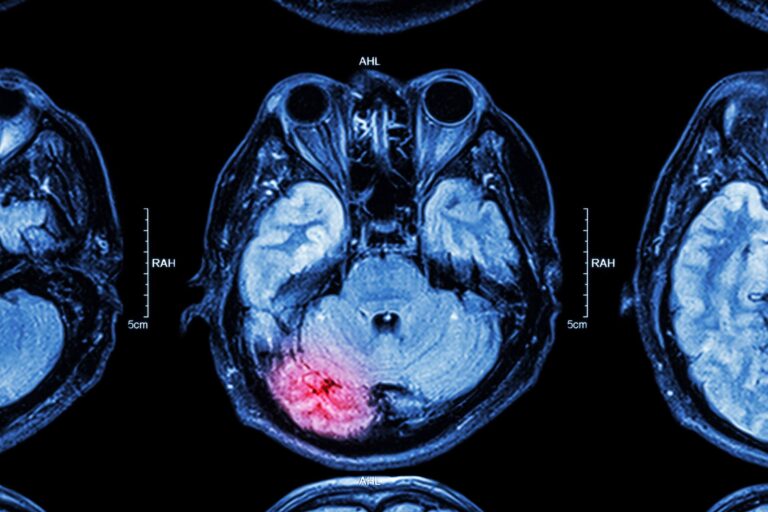
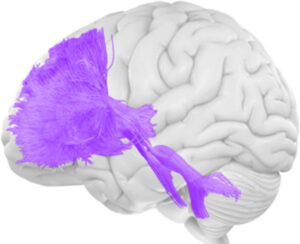


DTI (Diffusion Tensor Imaging) is an advanced type of MRI brain scan that maps the brain’s white matter pathways with remarkable precision. Unlike standard MRI scans that show brain structure, DTI tracks water movement along nerve fibers to reveal the integrity and organization of white matter tracts—the neural highways connecting different brain regions.
How DTI works:
• Uses magnetic fields and radio waves (no radiation)
• Measures microscopic water movement in brain tissue
• Tracks water diffusion along nerve fiber bundles
• Creates 3D maps of white matter pathways (fiber tractography)
• Produces color-coded images showing brain connectivity
Key benefits:
• Detects brain damage invisible on standard MRI
• Maps critical pathways before brain surgery
• Predicts stroke recovery with up to 80% accuracy
• Monitors disease progression over time
• Non-invasive and painless
DTI is particularly valuable for:
• Brain tumor surgical planning and protecting critical pathways
• Traumatic brain injury and concussion assessment
• Stroke recovery prediction and rehabilitation planning
• Multiple sclerosis diagnosis and monitoring
• Alzheimer’s and Parkinson’s disease evaluation
• Epilepsy presurgical evaluation
• Pediatric developmental disorders (autism, ADHD, cerebral palsy)
What makes DTI different from regular MRI:
Think of a standard MRI as a photograph of a highway system, while DTI shows which lanes are open, which are blocked, and how traffic flows.
Your doctor ordered a DTI scan to evaluate white matter integrity, brain connectivity, or neural pathway damage that cannot be seen on standard MRI scans. DTI provides critical information for diagnosis, treatment planning, and monitoring neurological conditions.
Common reasons your doctor ordered this test:
• Brain injury assessment (concussion or traumatic brain injury)
• Brain tumor evaluation and surgical planning
• Stroke evaluation and recovery prediction
• Neurological disease monitoring
• Unexplained neurological symptoms
• Pediatric neurological conditions
• Presurgical evaluation
The benefit:
DTI reveals white matter damage and neural pathway disruption that would remain invisible on conventional MRI, leading to more accurate diagnoses and better treatment planning.
Yes, you need a referral (also called a doctor’s order or prescription) to get a DTI scan at American Health Imaging.
What your referral does:
• Specifies that DTI imaging is medically necessary
• Provides clinical information about your symptoms and condition
• Is required for insurance coverage
• Ensures the appropriate imaging protocol is performed
• Allows the radiologist to provide targeted interpretation
What information your doctor provides:
• Specific clinical indication (TBI, stroke, tumor, MS, etc.)
• Relevant medical history and symptoms
• Previous imaging results
• Whether contrast is needed
• Specific areas of concern
Once your doctor sends the order, we’ll contact you to schedule your appointment and verify insurance coverage.
Schedule your DTI scan:
https://americanhealthimaging.com/request-appointment/
Scheduling a same-day DTI scan at American Health Imaging is possible at select locations once you have your doctor’s referral.
Flexible scheduling options:
• Call your preferred American Health Imaging location directly
• Request an appointment online
• Same-day and next-day appointments available at select centers
• Extended evening and weekend hours at many locations
Important:
Not all American Health Imaging centers offer DTI imaging, as it requires specialized MRI equipment and advanced software. Confirm availability when scheduling.
What happens when you schedule:
• We verify your insurance coverage
• We obtain any required pre-authorization
• We confirm DTI availability at your location
• We provide preparation instructions
• We answer your questions
View imaging centers:
https://americanhealthimaging.com/location/
American Health Imaging offers DTI (Diffusion Tensor Imaging) at select locations across Alabama, Georgia, Texas, Florida, and South Carolina.
DTI availability:
• Multiple locations in Alabama
• Multiple locations in Georgia
• Select locations in Texas
• Select locations in Florida
• Select locations in South Carolina
Benefits of our outpatient DTI centers:
• Same-day and next-day appointments when available
• Extended evening hours
• Weekend availability
• Up to 60% cost savings compared to hospitals
Important:
Because DTI requires specialized MRI equipment and advanced post-processing software, not all imaging centers offer this service. We recommend calling ahead or checking the location page.
View all imaging centers:
https://americanhealthimaging.com/location/
DTI scans diagnose and evaluate a wide range of neurological conditions by revealing white matter pathway integrity, brain connectivity, and neural damage invisible on standard MRI.
Conditions evaluated with DTI:
• Brain trauma and injury
• Brain tumors and masses
• Stroke and vascular conditions
• Demyelinating diseases (such as multiple sclerosis)
• Neurodegenerative diseases
• Pediatric developmental disorders
• Epilepsy and seizure disorders
• Psychiatric conditions
Other conditions assessed:
• Hydrocephalus effects on white matter
• Normal pressure hydrocephalus
• Toxic leukoencephalopathy
• Metabolic disorders affecting white matter
• Hypoxic-ischemic brain injury
What DTI measures:
• Fractional Anisotropy (FA): white matter integrity
• Mean Diffusivity (MD): overall tissue damage
• Axial Diffusivity (AD): nerve fiber integrity
• Radial Diffusivity (RD): myelin sheath damage
DTI can detect abnormalities months or years before conventional MRI shows changes.
Preparing for a DTI scan is straightforward and similar to preparing for a standard brain MRI.
Before your appointment:
• No fasting required unless contrast is ordered
• Continue regular medications unless advised otherwise
• Remove jewelry and metal objects if possible
Day of your appointment:
• Arrive 15 minutes early
• Wear loose-fitting clothing without metal
• Avoid hair products or makeup with metallic particles
Inform the technologist if you:
• Have metal implants or fragments
• Have had prior surgeries with metal hardware
• Are pregnant or breastfeeding
• Have claustrophobia or anxiety
• Have tattoos with metallic ink
If contrast is used:
• You may need to fast for 4 hours
• Inform us of kidney issues or prior contrast reactions
• Drink plenty of water afterward
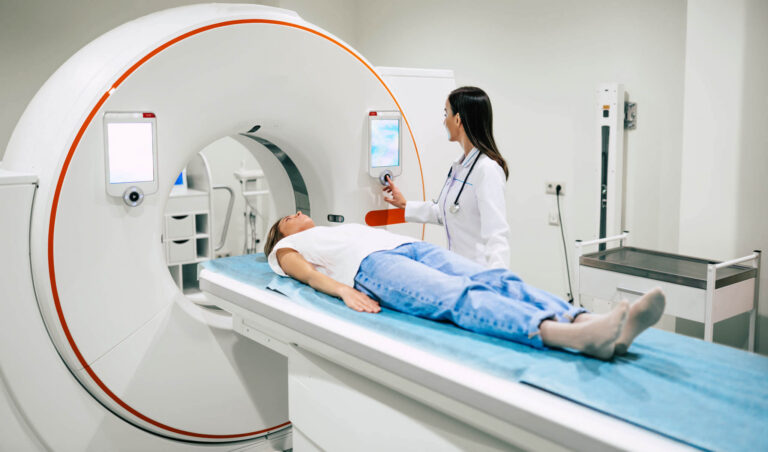
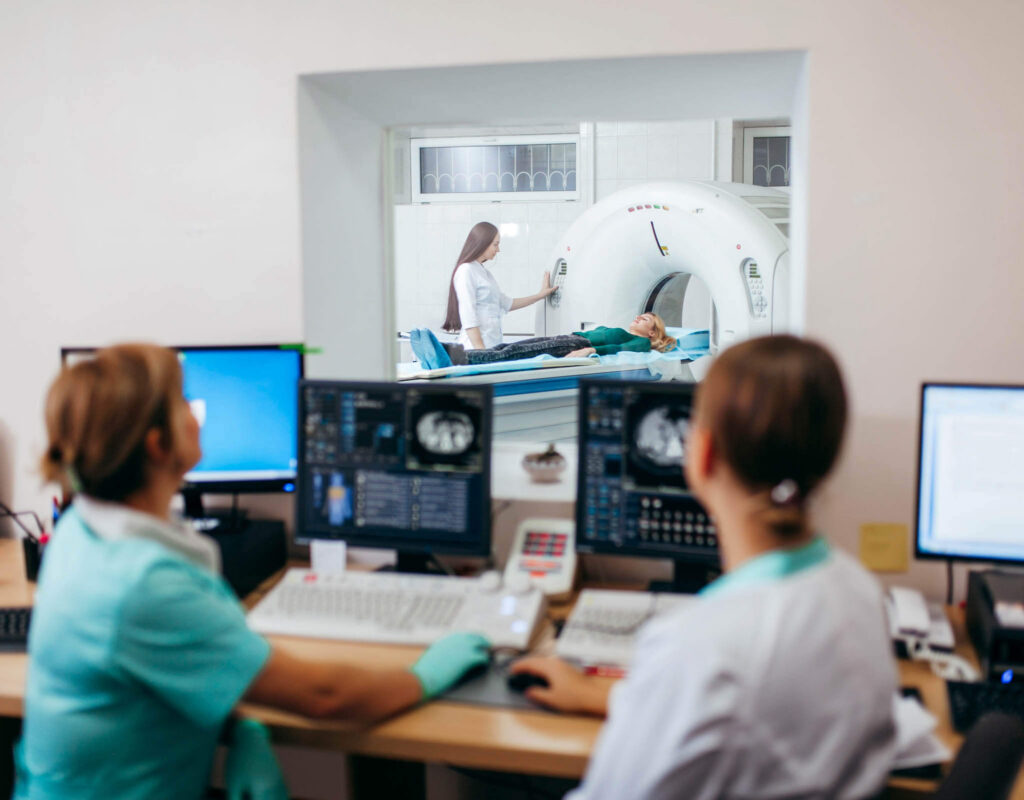
A DTI scan is performed as part of a brain MRI and usually takes 30–60 minutes.
What happens during your scan:
• Check-in and MRI safety screening
• Positioning with your head in a padded head coil
• Standard MRI sequences first
• DTI sequence lasting about 4–5 minutes
• Contrast injection if ordered
What you’ll experience:
• No pain
• Loud tapping or buzzing sounds
• Need to stay very still
• Ability to communicate with the technologist
After the scan, you can leave immediately with no recovery time.
After your DTI scan is complete, you can leave immediately and resume normal activities.
Immediately after:
• Drive yourself home (unless sedated)
• Resume eating, drinking, and exercising
• No activity restrictions
• Drink water if contrast was used
Getting your results:
• Images reviewed by board-certified neuroradiologists
• Report sent to your referring doctor
• Scanslated® patient-friendly report sent via text within 48 hours
Your doctor will contact you to discuss findings and next steps.
Your doctor typically receives results within 24 hours. In urgent cases, preliminary results may be available sooner.
You will receive:
• A text message with a link to your imaging report
• Easy-to-understand explanations
• Anatomical diagrams
DTI is highly accurate for detecting white matter abnormalities, brain connectivity problems, and neural pathway damage invisible on standard MRI.
Why DTI is highly accurate:
• Measures microscopic water diffusion
• Sensitive to subtle white matter changes
• Provides quantitative, objective data
• Detects damage before symptoms appear
• Tracks disease progression over time
DTI provides unique information unavailable from other imaging techniques when interpreted by experts.
A DTI scan typically takes 30–60 minutes total.
Time breakdown:
• Check-in and preparation: 10–15 minutes
• Standard brain MRI: 20–50 minutes
• DTI sequence: 4–5 minutes
The cost of a DTI scan varies based on insurance coverage, whether contrast is used, and exam complexity.
American Health Imaging offers:
• In-network coverage with 99% of insurance plans
• Up to 60% cost savings compared to hospitals
• Transparent cost estimates before your visit
• Self-pay options for uninsured patients
Most insurance plans cover DTI scans when medically necessary and ordered by your physician, though coverage varies by plan.
Common covered indications:
• Brain tumor surgical planning
• Traumatic brain injury with persistent symptoms
• Stroke assessment and rehabilitation planning
• Multiple sclerosis diagnosis and monitoring
• Unexplained neurological symptoms
• Presurgical epilepsy evaluation
• Neurodegenerative disease assessment
American Health Imaging handles:
• Insurance verification
• Prior authorization
• Claims submission
• Cost transparency