


Low-Dose CT Lung Screening

What is Low-Dose CT Lung Screening?

Low-dose CT lung screening uses minimal radiation to create detailed pictures of your lungs, helping detect lung cancer at its earliest and most treatable stages. This life-saving screening is specifically designed for people at high risk of developing lung cancer due to smoking history, using significantly less radiation than a standard CT scan, about one-fifth the dose.

Unlike a regular chest X-ray, which can miss small abnormalities, low-dose CT creates cross-sectional images of your lungs that can reveal nodules as small as a grain of rice. Early detection through screening has been proven to reduce lung cancer deaths by up to 20% in high-risk individuals.

Low-dose CT lung screening is particularly valuable for:

  • Current smokers with significant smoking history
  • Former smokers who quit within the past 15 years
  • Adults aged 50-80 with at least 20 pack-years of smoking
  • Early detection when cancer is most treatable
  • Peace of mind through annual monitoring

Low-Dose CT Lung Screening Services at American Health Imaging

American Health Imaging is in-network with 99% of insurance plans and offers low-dose CT lung screening services up to 60% less than hospital-based imaging.

Low-Dose CT Lung Screening Imaging Centers Near You

Find convenient low-dose CT lung screening near you at any of our American Health Imaging centers. We offer same-day and next-day appointments with extended hours and weekend availability to match your schedule and needs.

Find Your Nearest Low-Dose CT Lung Screening Imaging Center

What is Low-Dose CT Lung Screening Used For?

Low-dose CT lung screening is designed to detect lung cancer early when it’s most treatable, before symptoms appear. Lung cancer is the leading cause of cancer deaths in the United States, claiming more lives each year than breast, colon, and prostate cancers combined. When caught early, before it has spread, the five-year survival rate improves dramatically.

You may be a candidate for screening if you meet these criteria:

  • Age 50-80 years old
  • No signs or symptoms of lung cancer
  • At least 20 pack-years of smoking history (one pack-year equals one pack per day for one year)
  • Current smoker or quit within the past 15 years

Your doctor will evaluate your individual risk factors and determine if screening is appropriate for you. If you meet the criteria, most insurance plans—including Medicare—cover annual screening with no out-of-pocket costs.

Types of Low-Dose CT Lung Screening Scans We Offer

A 1.2T High Field Open MRI is a type of Open MRI scanner that has a strong magnet (1.2 Tesla) and an open design, making it more comfortable for people who feel claustrophobic or have a larger body. The Open MRI has an open front and sides designed to provide increased comfort. The “high field” means it has a stronger magnetic field than some other MRI machines, which helps in getting more accurate images.

A 1.5T High Field MRI is a medical imaging machine that uses a strong magnetic field (1.5 Tesla) to create clear and detailed pictures of the inside of your body. The “high field” means it has a stronger magnetic field than some other MRI machines, which helps in getting more accurate images.

A 1.5T Wide Bore MRI is a type of medical imaging machine that uses a strong magnetic field (1.5 Tesla) to take detailed pictures of the inside of your body. The “wide bore” part means the opening of the machine is larger at 27 ½” wide, making it more comfortable for people who feel anxious or are larger in size. Many of our 1.5T Wide Bore MRIs feature faster scanning technology to reduce most exams to 15 minutes.

A 16-slice CT scanner is a medical imaging machine that takes detailed X-ray pictures of your body in thin slices, which are then combined to create a complete image. The “16-slice” part means it can capture 16 slices of images at once, allowing for faster and more detailed scans.

3D mammography, or tomosynthesis, is an advanced x-ray technology that takes multiple images of breast tissue to create a 3-dimensional picture of the breast. It differs from traditional mammography in that traditional mammography yields only a single image. A 3D image of the breast allows for better assessment of masses and reduces the likelihood of a false positive or an unnecessary biopsy.

A 3T MRI is a medical imaging machine that uses an even stronger magnetic field (3 Tesla) to take very detailed pictures of the inside of your body. Because of its high strength, it can capture clearer images and is often used for more complex scans. Often used for prostates and different types of brain imaging. The “wide bore” part means the opening of the machine is larger at 27 ½” wide, making it more comfortable for people who feel anxious or are larger in size.

A 64-slice CT scanner is a medical imaging machine that takes very detailed X-ray pictures of your body by capturing 64 slices of images at once. This allows for faster scans and even more detailed images, which is useful for diagnosing complex conditions. Our 64-slice CT features innovative technology that automates dose according to your size, weight, and anatomy, providing high-quality images with minimal radiation.

ABUS Breast Cancer Screening uses sound waves to create 3D pictures of the breast tissue. ABUS breast cancer screening technology is specifically developed and FDA-approved for women with dense breast tissue.

An arthrogram visualizes the inside of a joint, such as the shoulder, knee, hip, or wrist. A contrast dye is injected into the joint to make the joint structures, including ligaments, tendons, cartilage, and the joint capsule, more visible on X-ray or MRI images.

Coronary Calcium CT – also called Cardiac Scoring – measures calcified (hard) plaque inside the arteries that can grow and restrict blood flow to the muscles of the heart identifying potential Coronary Artery Disease (CAD) before you have symptoms.

A DEXA scan is a medical imaging technique used to measure bone mineral density. It is commonly performed to diagnose osteoporosis or assess the risk of developing fractures as we age.

Diffusion Tensor Imaging (DTI) is a special type of MRI technique that helps doctors see the pathways of nerve fibers in the brain. By looking at these images, doctors can better understand how the brain’s wiring works and diagnose conditions like brain injuries, tumors, or diseases that affect these connections.

Faster scanning MRI technology reduces the time patients spend on the table for scans by up to 50% to an average scan time of less than 15 minutes providing a more comfortable imaging experience for anxious patients or anyone in pain. AI technology delivers high quality images with reduced motion artifacts and noise distortions for the diagnostic insights providers need to determine next steps in patient care.

Fluoroscopy uses injected contrast dye and an X-Ray machine to take a continuous series of X-rays instead of individual snapshots. It is most commonly used to evaluate parts of your body that are moving in order to create a short video of your body system in motion. It is particularly useful for observing the digestive, urinary, respiratory, and reproductive systems and their functioning.

A screening mammography is a specialized X-ray of the breasts that takes images from different angles. These images can reveal abnormalities in breast tissues. This exam is annually recommended for all women over the age of 40.

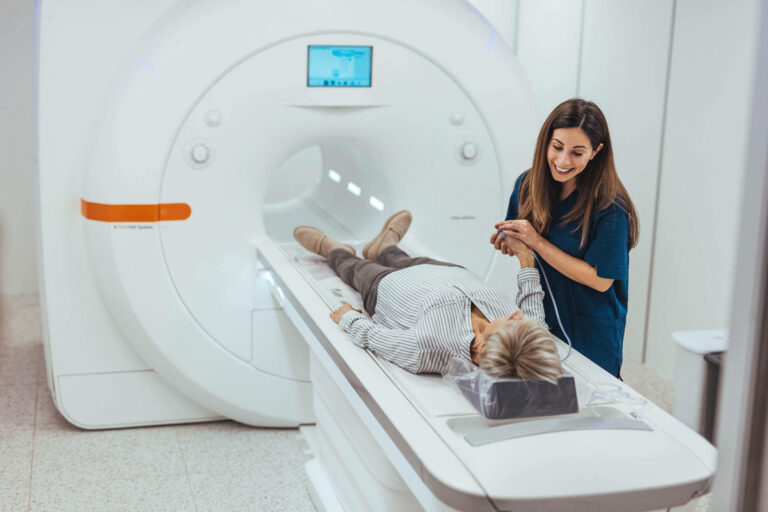
Our MRI machines use a powerful magnetic field, radio waves, and a computer to generate detailed images of organs, tissues, bones, and other structures inside the body. With a larger bore or tunnel-like opening compared to traditional MRI machines, our wide-bore MRI provides high quality images without compromising patient comfort.

Our MRI machines use a powerful magnetic field, radio waves, and a computer to generate detailed images of organs, tissues, bones, and other structures inside the body. With a larger bore or tunnel-like opening compared to traditional MRI machines, our wide-bore MRI provides high quality images without compromising patient comfort.

Myelogram imaging is used to evaluate the spinal cord, nerve roots, and surrounding structures in the spine with an injectable contrast dye to enhance the visibility of the spinal cord and nerves on X-ray images.

Specialty post processing technology used for brain MRI to assess brain volume and atrophy for neurological diseases including dementia, Alzheimers, seizures, MS lesions and Traumatic Brain Injuries.

The Open Upright MRI, also known as a stand-up MRI, is the only MRI scanner able to scan you in multiple positions, including sitting, standing, bending (for flexion and extension) or lying down. This unique MRI provides natural weight-bearing imaging and is helpful for your doctor to diagnose the area where you experience pain. The Open Upright MRI is open in front of you, behind you, and above you. This open design may be more comfortable for people who feel anxious or are larger in size.

A PET/CT (Positron emission tomography) is a non-invasive exam that uses small amounts of radioactive materials called radiotracers to reveal how internal organs are functioning. The scan takes about 60 minutes and images are captured via CT as your body processes the radioactive material. This offers great insight into the root of the disease process or the source of symptoms.

What to Expect During Your Low-Dose CT Lung Screening Appointment

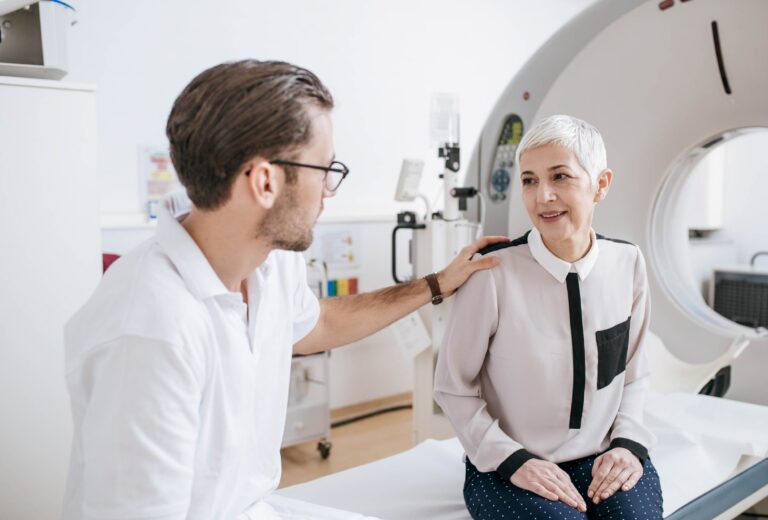
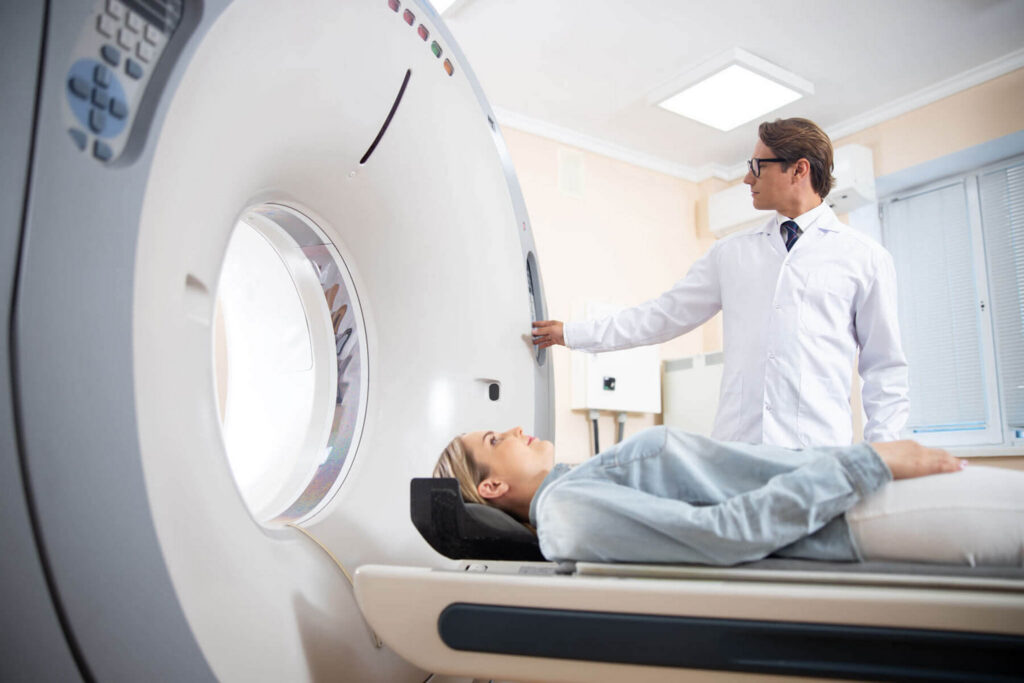
Your low-dose CT lung screening is quick, simple, and designed for comfort. You’ll lie on a cushioned table that slides into the CT scanner—an open, donut-shaped machine rather than a closed tunnel. You’ll be asked to hold your breath for just a few seconds while the images are taken, and the actual scan lasts less than 60 seconds. There’s no fasting or special preparation required, and a technologist will monitor you and communicate with you throughout the exam

What makes low-dose CT lung screening convenient:

  • Quick scan: Less than 60 seconds of actual imaging
  • Total appointment time: 15-30 minutes
  • No fasting or special preparation
  • No recovery time needed
  • Minimal radiation exposure

Why Choose American Health Imaging for Your Low-Dose CT Lung Screening

American Health Imaging (AHI) is in-network with 99% of insurance plans for low-dose CT lung screening and offers fast scheduling combined with experienced technologists for accurate, comfortable exams.

  • Significant cost savings up to 60% compared to hospital lung screening pricing
  • Advanced CT scanners specifically designed for low-dose imaging
  • Same-day and next-day appointments available with convenient scheduling
  • Extended and weekend hours at many outpatient imaging centers
  • Board-certified radiologists with subspecialty training in thoracic imaging provide accurate interpretations
  • Minimal radiation exposure
  • With a 97% patient satisfaction score, patients love our compassionate techs and comfortable environment

Schedule Your Low-Dose CT Lung Screening Today

Scheduling your low-dose CT lung screening with American Health Imaging is made easy in just a few steps:

  1. Get a referral from your doctor (required for insurance coverage)
  2. Choose your location from our centers across Alabama, Georgia, Florida, Texas, and South Carolina
  3. Schedule your appointment online or by phone—same-day slots often available
  4. Arrive for your quick, painless scan

Common Questions About Low-Dose CT Lung Screening Scans

What is low-dose CT lung screening?

Low-dose CT lung screening is a quick, painless imaging test that uses minimal radiation to create detailed pictures of your lungs, helping detect lung cancer at its earliest and most treatable stages.

How it works:
• Uses a specialized CT scanner with significantly reduced radiation
• Creates cross-sectional images of your lungs
• Can detect nodules as small as 2–3 mm (about the size of a grain of rice)
• Takes less than 60 seconds to complete
• No contrast dye or special preparation needed

Low-dose CT lung screening is ideal for:
• Adults aged 50–80 with significant smoking history
• Current smokers or those who quit within the past 15 years
• Annual monitoring for high-risk individuals
• Early detection before symptoms appear
• Peace of mind for those at elevated lung cancer risk

Why did my doctor order a low-dose CT lung screening?

Your doctor ordered low-dose CT lung screening because you meet the criteria for individuals at high risk of developing lung cancer based on your age and smoking history.

Common reasons for ordering this screening:
• Significant smoking history (at least 20 pack-years)
• Current smoker
• Former smoker who quit within the past 15 years
• Age eligibility (50–80 years old)
• Preventive care—early detection saves lives

The benefit:
Lung cancer is the leading cause of cancer deaths in the U.S. Early detection through screening can find cancer when it is small, localized, and most treatable—often before symptoms appear.

Do I need a referral for low-dose CT lung screening?

Yes, you need a referral (also called a doctor’s order or prescription) to get low-dose CT lung screening.

What your referral does:
• Documents your smoking history and eligibility criteria
• Is required for insurance coverage, including Medicare
• Ensures screening is appropriate for your situation
• Allows for proper follow-up if abnormalities are found

Once your doctor sends the order to American Health Imaging, we’ll contact you to schedule your appointment and verify your insurance coverage.

Schedule your screening:
https://americanhealthimaging.com/request-appointment/

How do I schedule a same-day low-dose CT lung screening?

Scheduling a same-day low-dose CT lung screening at American Health Imaging is easy and convenient.

Flexible scheduling options:
• Call us or request an appointment online
• Same-day and next-day appointments available
• Extended and weekend hours at many locations
• No special preparation or fasting required

Once your referral is received, we can often schedule your scan quickly at one of our convenient locations across Alabama, Georgia, Tallahassee, FL, Beaumont, TX, San Antonio, TX, and South Carolina.

Schedule your screening:
https://americanhealthimaging.com/request-appointment/

What imaging centers near me offer low-dose CT lung screening?

American Health Imaging offers low-dose CT lung screening at convenient locations across five states.

Our low-dose CT lung screening locations:
• Alabama
• Georgia
• Tallahassee, FL
• Beaumont, TX
• San Antonio, TX
• South Carolina

All locations offer same-day and next-day appointments, extended hours, weekend availability, ample parking, and compassionate, experienced staff.

View all imaging centers:
https://americanhealthimaging.com/location/

Who should get low-dose CT lung screening?

Low-dose CT lung screening is recommended for adults at high risk of lung cancer based on age and smoking history.

You should get screened if you meet all of these criteria:
• Age 50–80 years old
• At least 20 pack-years of smoking history
• Current smoker or quit within the past 15 years
• No signs or symptoms of lung cancer
• Healthy enough to undergo treatment if cancer is found

Additional risk factors that support screening:
• Family history of lung cancer
• Exposure to radon, asbestos, or other carcinogens
• Chronic lung conditions such as COPD or emphysema
• Secondhand smoke exposure

Most insurance plans, including Medicare, cover annual screening with no out-of-pocket costs for eligible individuals.

How should I prepare for my low-dose CT lung screening?

Preparing for low-dose CT lung screening is simple and requires very little preparation.

Before your appointment:
• No fasting required—eat and drink normally
• Wear comfortable, loose-fitting clothing without metal zippers or buttons
• Bring your insurance card and photo ID
• Inform us if you are pregnant or might be pregnant

Day of your appointment:
• Arrive on time to complete paperwork
• You may be asked to change into a gown
• Remove jewelry, glasses, and metal objects from your chest area
• Be prepared to hold your breath for a few seconds during scanning

No contrast dye is typically needed unless specifically ordered by your doctor.

What should I expect during a low-dose CT lung screening?

During your low-dose CT lung screening, you’ll lie comfortably on your back while a specialized scanner captures detailed images of your lungs in less than 60 seconds.

What happens during your scan:
• Check-in and preparation (10–15 minutes)
• Change into a gown and remove metal objects
• Lie on a cushioned exam table
• Hold your breath briefly while images are taken
• Table slides into an open, donut-shaped scanner
• Technologist monitors and communicates with you

Total appointment time is usually 15–30 minutes.

Key benefits:
• Quick and painless
• No needles or contrast dye
• Open scanner design (not claustrophobic)
• Minimal radiation exposure
• No recovery time needed

What happens after my low-dose CT lung screening is complete?

After your low-dose CT lung screening, you can resume all normal activities immediately.

Immediately after your scan:
• Resume eating and drinking normally
• Take medications as prescribed
• Drive yourself home
• Return to work, exercise, and daily activities
• No side effects or recovery time

Getting your results:
• Board-certified radiologists with thoracic imaging expertise review your images
• Your doctor receives a written report within a few hours after finalization
• You receive a patient-friendly report via text through Scanslated® within 48 hours

Most screenings show no signs of cancer. If a finding is detected, your doctor will guide next steps.

When will I get my low-dose CT lung screening results?

Your doctor typically receives results within a few hours after the report is finalized.

You will receive:
• A text message with a link to your Scanslated® patient-friendly report within 48 hours

All scans are reviewed by board-certified radiologists with subspecialty training in thoracic imaging.

How accurate is low-dose CT for detecting lung cancer?

Low-dose CT is highly effective at detecting early-stage lung cancer and is far more sensitive than chest X-rays.

Accuracy highlights:
• Detects nodules as small as 2–3 mm
• Finds lung cancer when it is small and before it spreads
• Much more sensitive than chest X-rays

Important to know:
About 1 in 4 people will have a lung nodule detected, but more than 97% of these nodules are benign (not cancerous). Your doctor will determine appropriate follow-up based on nodule characteristics.

How long does a low-dose CT lung screening take?

A low-dose CT lung screening typically takes 15–30 minutes total.

Why it’s so quick:
• Rapid low-dose scanning technology
• No contrast dye or IV placement
• No fasting or special preparation
• Images captured in a single breath-hold

You can return to normal activities immediately after your screening.

How much does low-dose CT lung screening cost?

The cost of low-dose CT lung screening varies depending on insurance coverage and eligibility.

American Health Imaging:
• In-network with 99% of insurance plans
• Verifies coverage and eligibility
• Obtains prior authorization if needed
• Provides cost estimates before your appointment
• Offers transparent pricing for self-pay patients

We can save you up to 60% compared to hospital-based imaging.

Is low-dose CT lung screening covered by insurance?

Yes, most insurance plans, including Medicare and Medicaid, cover annual low-dose CT lung screening with no out-of-pocket costs for eligible individuals.

Coverage generally requires:
• Age 50–80
• At least 20 pack-years of smoking history
• Current smoker or quit within the past 15 years
• Doctor’s referral documenting eligibility
• Counseling visit discussing benefits and risks (may be required)

We verify coverage and handle any required pre-authorization.

What if the screening finds a lung nodule?

Finding a lung nodule is common—about 1 in 4 people will have one detected during screening. More than 97% of lung nodules found on screening are benign.

Possible causes:
• Old infections or scar tissue
• Inflammation or granulomas
• Benign growths
• Lymph nodes

What happens next:
• Radiologists evaluate size, shape, and density
• Lung-RADS category determines follow-up
• Small nodules are usually monitored
• Larger or suspicious nodules may require further testing

Follow-up recommendations:
• Lung-RADS 1–2: Annual screening
• Lung-RADS 3: Repeat CT in 6 months
• Lung-RADS 4: Repeat CT in 3 months or additional testing

Your care team will guide you through next steps and answer any questions.

Patient Reviews and Testimonials

With a 97% satisfaction score, we’re proud to deliver compassionate care, clear communication, and imaging you can count on.

Have you visited a American Health Imaging Center lately?

Your feedback helps us continue providing exceptional care. If you’ve had a recent experience at one of our locations, we’d love to hear from you.

Low-Dose CT Lung Screening Articles and Resources

Do you need to schedule a Low-Dose CT Lung Screening?

American Health Imaging offers same-day and next-day appointment options to make getting an imaging scan convenient. Get a referral from your doctor, find the American Health Imaging center closest to you, and then call to schedule an imaging appointment.