

Once your doctor determines that an ultrasound is necessary, their office will typically send us your prescription or order, and we’ll contact you to schedule your appointment. We verify your insurance coverage and obtain any required pre-authorizations.
If you don’t have insurance or have a high deductible, we also offer affordable self-pay rates.
We offer same-day and next-day appointments to ensure your exam fits your schedule.
Schedule your ultrasound:
https://americanhealthimaging.com/request-appointment/
View all imaging centers:
https://americanhealthimaging.com/location/
Yes, you need a referral (also called a doctor’s order) to get an ultrasound.
What your referral does:
• Specifies which body area needs to be scanned
• Indicates whether contrast is needed
• Is required for insurance coverage
• Ensures the right exam is performed for your specific medical concerns
Once your doctor sends the order to American Health Imaging, we’ll contact you to schedule your appointment and verify your insurance coverage.
Schedule your ultrasound:
https://americanhealthimaging.com/request-appointment/
Preparation for ultrasound varies depending on the type of exam you’re having. Your doctor or our scheduling team will provide specific instructions when your appointment is scheduled.
Typical preparation may include:
Abdominal ultrasound (liver, gallbladder, pancreas, spleen):
• Eat a fat-free meal the evening before
• Fast (no food or drink except water) for 8–12 hours
• Prevents gas buildup and improves image clarity
Renal (kidney) ultrasound:
• Drink 4–6 glasses (32–48 ounces) of water 1 hour before
• Do NOT empty your bladder
• A full bladder improves visualization
Pelvic ultrasound:
• Drink 32 ounces of water 1 hour before
• Arrive with a full bladder
• Do NOT empty your bladder
Thyroid/neck ultrasound:
• No special preparation required
• Avoid necklaces or turtlenecks
General tips:
• Arrive 10–15 minutes early
• Bring photo ID and insurance card
• Bring a list of medications
• Inform the technologist of symptoms or concerns
Your ultrasound exam is simple, comfortable, and usually painless.
What happens during your exam:
• You may change into a gown depending on the area being examined
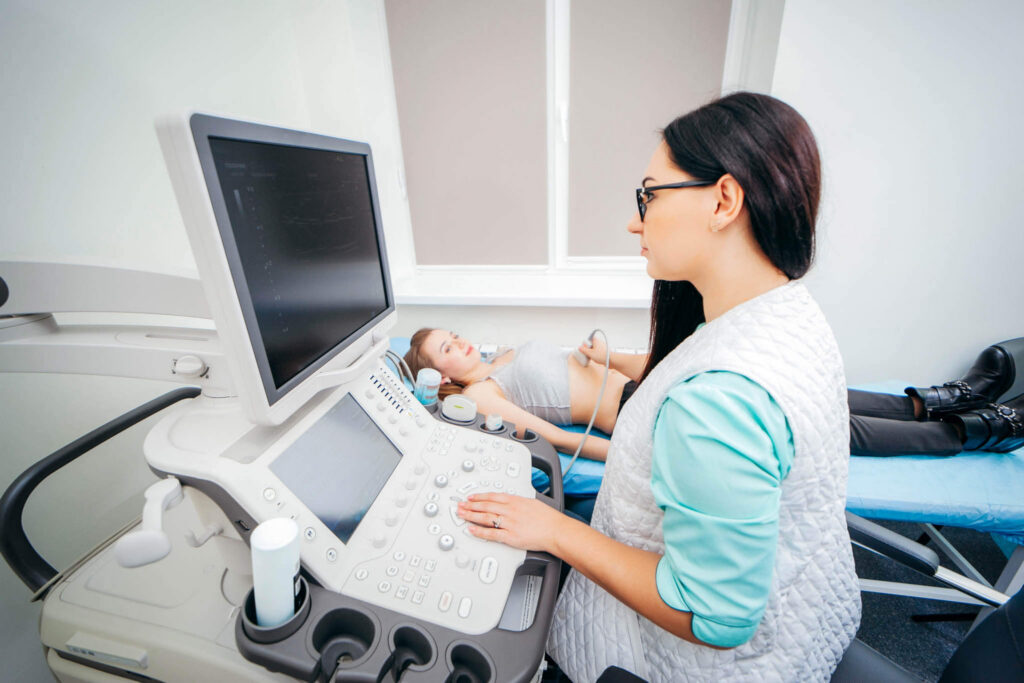
• You’ll lie on an exam table (sometimes seated or standing)
• Warm gel is applied to your skin
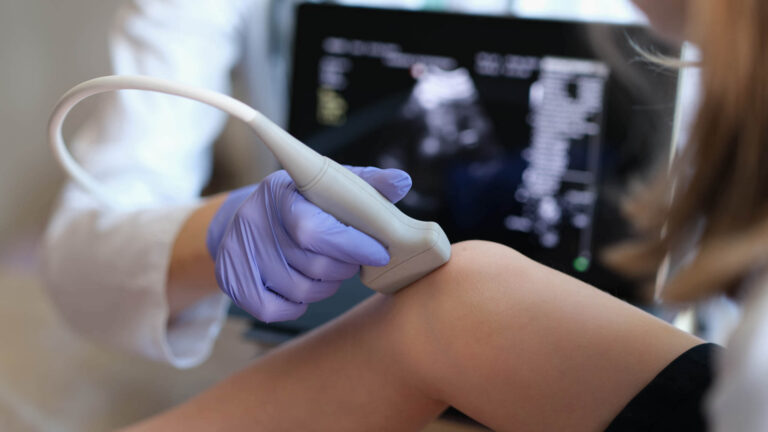
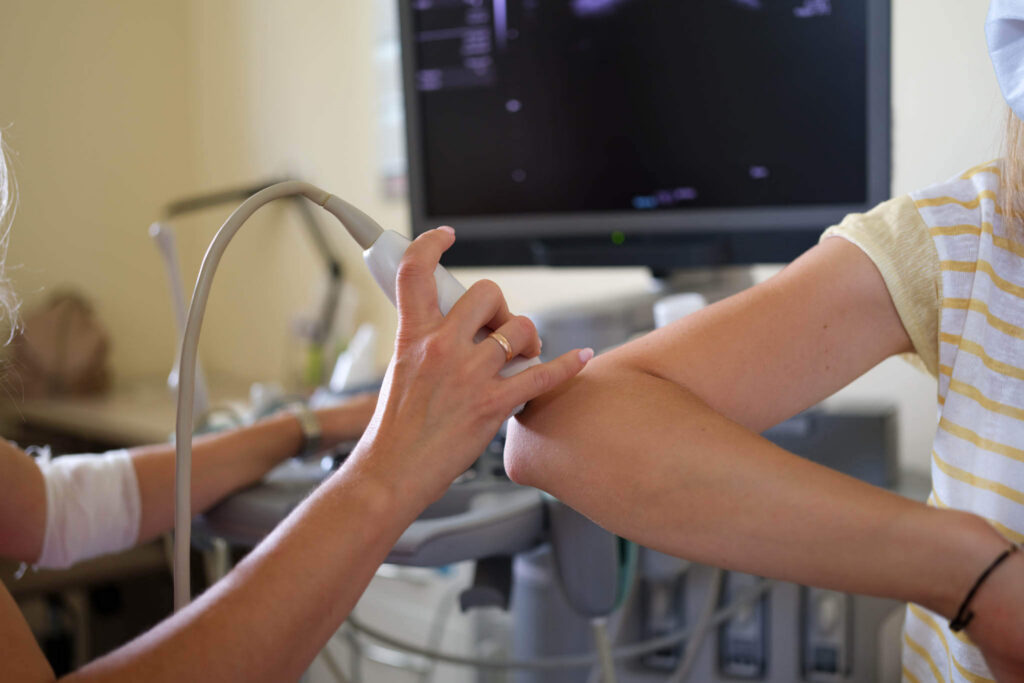
• The technologist moves a handheld transducer over the area
• You may be asked to change positions or briefly hold your breath
• Doppler exams may produce whooshing sounds
• Most exams take 15–45 minutes
You may feel mild pressure from the transducer. If you’re uncomfortable or have a full bladder, let the technologist know.
No. Ultrasound uses absolutely no radiation. It relies only on high-frequency sound waves, similar to sonar.
Ultrasound is ideal for patients who:
• Need repeated imaging
• Want to avoid radiation exposure
• Require frequent monitoring
• Cannot undergo CT due to contrast allergies or kidney issues
Because there is no radiation, ultrasound can be safely performed as often as medically necessary.
The length of your ultrasound depends on the type of exam.
Typical exam times:
• Focused ultrasound: 15–20 minutes
• Abdominal ultrasound: 30–45 minutes
• Vascular Doppler study: 30–60 minutes
• Thyroid ultrasound: 15–20 minutes
• Renal ultrasound: 20–30 minutes
Total appointment time, including check-in, is usually 30–60 minutes.
You can resume all normal activities immediately after your ultrasound.
After your exam:
• No recovery time
• No side effects
• Eat, drink, drive, and exercise normally
• Use the restroom immediately if you had a full bladder
Getting your results:
• Board-certified radiologists review your images
• Your doctor receives your results
• You receive a patient-friendly report via text
A full bladder is important for pelvic and kidney ultrasounds.
Why it helps:
• Improves sound wave transmission
• Pushes bowel gas out of the way
• Acts as a landmark for pelvic organs
• Provides contrast for clearer images
Not all ultrasounds require a full bladder. We’ll let you know when scheduling if this preparation is necessary.
Fasting improves image quality for abdominal ultrasounds.
Why fasting matters:
• Prevents gas buildup that blocks sound waves
• Keeps the gallbladder full and visible
• Reduces organ movement
• Prevents imaging artifacts
You may still:
• Take essential medications with small sips of water
Only certain abdominal exams require fasting. Kidney, pelvic, and thyroid ultrasounds usually do not.
No. Ultrasound technologists are not permitted to interpret results or provide diagnoses.
What the technologist can do:
• Perform the exam
• Capture high-quality images
• Explain the procedure
• Answer process-related questions
What they cannot do:
• Interpret findings
• Diagnose conditions
• Discuss abnormalities
Only a board-certified radiologist can interpret your images and send results to your doctor.
Ultrasound costs vary depending on the exam type and body area.
Factors affecting cost:
• Type of ultrasound
• Complexity of the exam
• Doppler blood flow evaluation
• Insurance deductible status
• Hospital vs. outpatient imaging
American Health Imaging offers transparent pricing up to 60% less than hospital ultrasound costs.
Yes, most insurance plans cover medically necessary ultrasounds ordered by your doctor.
American Health Imaging:
• In-network with 99% of insurance plans
• Verifies coverage and obtains pre-authorization
• Provides cost estimates before your exam
If you don’t have insurance, affordable self-pay options are available.
Ultrasound offers several unique advantages:
Advantages:
• No radiation exposure
• Real-time imaging
• Dynamic evaluation during movement
• Excellent at distinguishing fluid from solid masses
• Less expensive than MRI or CT
• No contrast dye required
• No claustrophobia
• Safe with metal implants and pacemakers
• Can guide procedures in real time
Other imaging may be better when:
• MRI is needed for detailed soft tissue or brain imaging
• CT is needed for bones, lungs, or bleeding
Yes. Ultrasound is extremely safe with no known risks or side effects.
Why ultrasound is safe:
• Uses sound waves only
• Non-invasive
• No cumulative exposure risk
• Safe for all ages
The only discomfort may be temporary pressure from the transducer or a full bladder.
What ultrasound shows well:
• Soft tissue organs
• Fluid-filled structures
• Blood flow with Doppler
• Muscles, tendons, ligaments, and joints
• Gallstones and kidney stones
• Real-time movement
What ultrasound doesn’t show well:
• Bones
• Air-filled organs like lungs
• Deep structures behind bone
• Brain tissue
Your doctor may recommend additional imaging if needed.
Ultrasound can detect masses that may represent cancer, but it cannot definitively diagnose cancer without a biopsy.
Ultrasound can:
• Identify solid vs. cystic masses
• Detect suspicious characteristics
• Guide biopsies
• Monitor tumor size
Biopsy and additional imaging are often required for confirmation.
Yes. Ultrasound is the best test for detecting gallstones and is often the first imaging test ordered.
Gallstones:
• Sensitivity of 95% or higher
• Detects inflammation and bile duct issues
Kidney stones:
• Detects most stones
• Excellent for identifying blockages
• CT is better for very small stones
Ultrasound is preferred for pregnant patients, children, and frequent monitoring.
It depends on the exam and your clothing.
You may keep clothes on if:
• The area is easily accessible
• Clothing doesn’t interfere
You’ll change into a gown if:
• Having abdominal, pelvic, or kidney ultrasound
• Clothing blocks the area
Wearing loose, two-piece clothing is recommended.
Yes. You can eat and drink normally immediately after your ultrasound.
You can also:
• Take medications
• Drive yourself home
• Return to work or exercise
There is no recovery time.
Your doctor ordered ultrasound because it’s often the best first imaging test.
Ultrasound is ideal when:
• Evaluating fluid vs. solid masses
• Assessing blood flow
• Avoiding radiation
• Quick results are needed
• Cost is a consideration
• Metal implants are present
MRI or CT may be ordered if more detailed imaging is required.