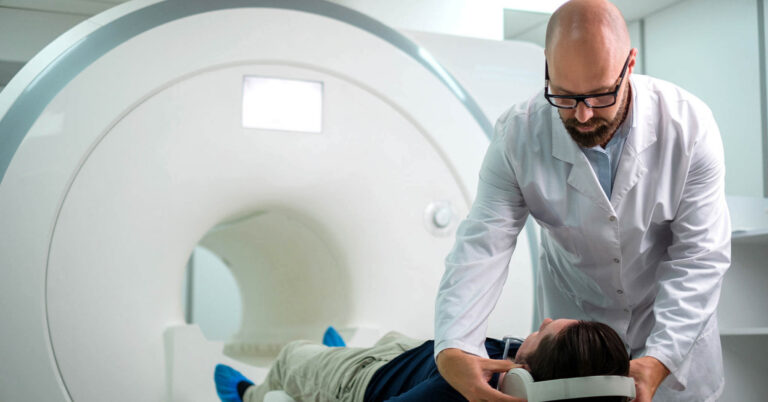
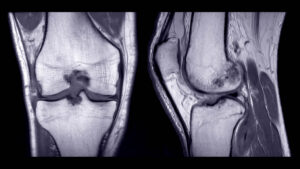
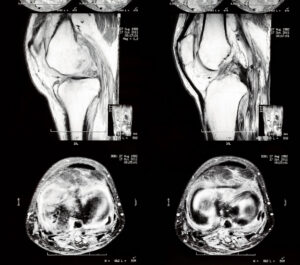



An arthrogram is a specialized joint imaging procedure that combines contrast dye injection with MRI or CT scanning to diagnose joint problems. During the procedure, a radiologist injects contrast material directly into your joint space using fluoroscopy or ultrasound guidance. This contrast acts like a highlighter, making tears in ligaments, cartilage, and labral tissue clearly visible on imaging.
Arthrograms are the gold standard for detecting:
• Shoulder labral tears (SLAP lesions)
• Hip labral tears
• Rotator cuff injuries
• Wrist ligament damage
• Meniscal tears
• Cartilage defects
The two-part procedure provides superior diagnostic accuracy, with studies showing that MRI arthrography detects labral tears with 93-96% accuracy, compared to just 65-80% for standard MRI.en.
Your doctor ordered an arthrogram because you need detailed visualization of your joint’s internal structures that standard X-rays or MRI scans cannot provide clearly.
Common reasons your doctor ordered this test:
Persistent joint pain:
• You’ve experienced ongoing joint pain that hasn’t improved with treatment
• Physical examination suggests a soft tissue injury
• Standard imaging has been inconclusive or unclear
Suspected specific injuries:
• Labral tears in your shoulder or hip (common in athletes and overhead activities)
• Rotator cuff tears, especially partial-thickness tears that standard MRI may miss
• Meniscal tears or ligament damage in your knee
• TFCC tears or ligament injuries in your wrist
• Cartilage damage or joint surface abnormalities
Pre-surgical planning:
• Your surgeon needs precise anatomical detail before arthroscopic surgery
• Mapping the exact location and extent of tears or defects
• Determining the best surgical approach for repair
Failed previous treatments:
• Your symptoms persist despite physical therapy or conservative treatment
• Previous imaging didn’t reveal the cause of your pain
• Your doctor needs to rule out hidden structural damage
The benefit: Arthrograms reveal injuries that other imaging tests miss, leading to accurate diagnosis and appropriate treatment, whether that’s physical therapy, injections, or surgery.
Yes, you need a referral (also called a doctor’s order or prescription) to get an arthrogram at American Health Imaging.
What your referral does:
• Specifies which joint needs to be examined (shoulder, hip, knee, wrist, ankle, or elbow)
• Indicates whether you need an MRI arthrogram or CT arthrogram
• Is required for insurance coverage
• Ensures the procedure is medically appropriate for your condition
Your orthopedic surgeon, sports medicine doctor, or primary care physician will order the arthrogram based on your symptoms and examination findings.
Once your doctor sends the order to American Health Imaging, we’ll contact you to schedule your appointment and verify your insurance coverage.
Schedule Your Arthrogram
Scheduling a same-day arthrogram at American Health Imaging is easy once you have your doctor’s referral.
Flexible scheduling options:
• Call your preferred American Health Imaging location directly
• Request an appointment online through our website
• Same-day and next-day appointments available at most locations
• Extended evening and weekend hours at select centers
Important: Arthrogram services are currently available only at select Georgia and Alabama locations. When you call to schedule, confirm that your preferred location offers arthrogram procedures. Our scheduling team will coordinate both the contrast injection and imaging portions of your appointment.
What we’ll do when you call:
• Verify your insurance coverage
• Explain preparation requirements
• Confirm which joint is being imaged
• Schedule both parts of your procedure (injection and imaging)
View Imaging Centers
American Health Imaging offers arthrogram services at select convenient locations in Georgia and Alabama.
Arthrogram availability:
• Multiple Georgia imaging centers
• Multiple Alabama imaging centers
• Same-day and next-day appointments
• Extended hours and weekend availability
Because arthrogram procedures require specialized equipment and trained radiologists to perform the contrast injection, not all American Health Imaging centers offer this service. We recommend calling ahead to confirm availability at your nearest location.
View Alabama Imaging Centers
View Georgia Imaging Centers
Arthrograms diagnose a wide range of joint injuries and conditions by providing detailed visualization of soft tissues, cartilage, ligaments, and joint structures that are difficult to see on standard imaging.
An Arthrogram helps diagnose various parts of your body, including:
• Shoulder
• Hip
• Knee
• Wrist
• Ankle
• Elbow
Diagnostic accuracy: Arthrography is highly accuracate for detecting labral tears, rotator cuff injuries, and ligament damage, significantly higher than standard MRI or CT alone.
Preparing for an arthrogram is straightforward and requires minimal advance preparation.
Before your appointment:
• Continue all regular medications unless your doctor advises otherwise
• If you take blood thinners (warfarin, Coumadin, Plavix, aspirin), contact your doctor—you may need to stop them temporarily 3-7 days before the procedure
• Arrange transportation if you’re anxious and want sedation (otherwise, you can drive yourself)
• Eat and drink normally—fasting is not required in most cases
Inform the imaging center if you:
• Have allergies to contrast dye, iodine, or local anesthetics
• Have metal implants, pacemakers, or other medical devices (important for MRI safety)
• Are pregnant or might be pregnant
• Have an active infection or fever
• Have diabetes and take insulin (blood sugar management may be needed)
Day of your appointment:
• Arrive 15 minutes early for registration and paperwork
• Wear loose, comfortable clothing with easy access to the joint being imaged
• Remove jewelry and metal objects before the procedure
• Bring your photo ID, insurance card, and referral
Your arthrogram is a two-part procedure that takes 30-90 minutes total. Understanding what happens helps reduce anxiety and ensures a smooth experience.
Part 1: Contrast Injection (20-30 minutes)
Preparation:
• You’ll change into a gown if needed
• The technologist positions you on the fluoroscopy or ultrasound table
• The radiologist identifies the exact injection site using real-time imaging
Injection process:
• The skin is cleaned with an antiseptic solution
• Local anesthetic is injected (brief stinging sensation, 5-10 seconds)
• Once numb, a thin needle is guided into your joint space
• Contrast material is injected slowly (feels like pressure or fullness, 30-60 seconds)
• The needle is removed, and a bandage is applied
Part 2: Imaging (10-45 minutes)
• After the injection, you’ll proceed immediately to either:
• MRI Arthrogram (30-45 minutes):
• CT Arthrogram (10-15 minutes):
Our compassionate imaging technologists guide you through every step and ensure your comfort throughout the procedure.
After your arthrogram is complete, you can go home immediately and resume most normal activities.
Immediately after your scan:
• You can drive yourself home (unless you received sedation)
• Resume eating, drinking, and taking medications normally
• Rest the injected joint for 24 hours
• Apply ice to the injection site if needed (15-20 minutes every few hours)
Expected side effects (normal and temporary):
• Mild soreness or stiffness in the joint for 24-48 hours
• Slight swelling at the injection site
• Feeling of fullness or tightness in the joint as contrast is absorbed
Your doctor: Typically receives results within several hours
You will receive: A text message with a link to view your imaging report within 48 hours after your image report is finalized
What’s included in your patient report:
• Scanslated® easy-to-understand explanations of medical terminology
• Description of contrast distribution and joint anatomy
• Details of any tears, defects, or abnormalities found
• Measurements and severity assessments
• Anatomical diagrams showing findings
• Information to help you prepare for your follow-up conversation with your doctor
How results are reviewed: Board-certified radiologists with musculoskeletal subspecialty training analyze your arthrogram images and prepare a comprehensive written report. Your referring physician (typically your orthopedic surgeon or sports medicine doctor) will review the results and contact you to discuss:
• What the arthrogram showed
• Your diagnosis
• Treatment options (conservative vs. surgical)
• Next steps in your care
Yes! Arthrograms are highly accurate and provide superior diagnostic capability compared to standard imaging.
Why are arthrograms more accurate?
• Contrast material outlines tears and defects that are invisible on standard imaging
• Direct visualization of joint structures with enhanced detail
• Superior contrast between normal and abnormal tissue
• Better evaluation of cartilage surfaces and labral anatomy
Arthrograms are excellent for diagnosing:
• Shoulder labral tears (SLAP lesions, Bankart lesions)
• Hip labral tears and femoroacetabular impingement
• Rotator cuff tears, especially partial-thickness tears
• Meniscal tears and ligament damage in the knee
• TFCC tears and wrist ligament injuries
• Cartilage defects and joint surface abnormalities
Important to know: Arthrograms are considered the gold standard for evaluating complex joint injuries, particularly when surgical planning requires precise anatomical detail. Your doctor chooses arthrography when the highest diagnostic accuracy is needed.
The complete arthrogram appointment: 30-90 minutes from check-in to finish
Breakdown of appointment time:
Part 1: Contrast injection: 20-30 minutes
Part 2: Imaging scan:
• MRI arthrogram: 30-45 minutes
• CT arthrogram: 10-15 minutes
Factors that affect time:
• Which joint is being examined (shoulder and hip take slightly longer)
• Whether you need MRI or CT imaging
• Your individual anatomy and how easily the joint can be accessed
The cost of an arthrogram varies depending on your insurance coverage, which joint is being examined, and whether you need MRI or CT imaging.
We’re in-network with 99% of insurance plans, which means lower out-of-pocket costs for you and offer cost savings up to 60% compared to hospital-based imaging.
Your typical out-of-pocket costs with insurance:
• Standard copay, coinsurance, or deductible
• Much lower than out-of-network providers
What we do for you:
• Verify your insurance coverage when you schedule
• Obtain any necessary pre-authorization from your insurance company
• Provide transparent cost estimates before your appointment
• Offer a single, easy-to-understand bill
Self-pay and high-deductible plans: If you don’t have insurance or have a high-deductible plan, we offer transparent self-pay rates up to 60% less than hospital pricing. Call us for a specific price quote based on your joint and imaging type.
Most insurance companies, including Medicare, cover medically necessary arthrograms when ordered by your doctor for diagnosing joint pain, labral tears, rotator cuff injuries, or ligament damage.
Most health insurance plans, including Medicare, cover medically necessary arthrogram procedures when ordered by your physician to diagnose joint problems.
Generally covered indications:
• Labral tears (shoulder or hip)
• Rotator cuff tears
• Meniscal tears
• Ligament injuries (wrist, knee, ankle)
• Cartilage damage
• Unexplained joint pain when standard imaging is inconclusive
• Pre-surgical planning for arthroscopic procedures
American Health Imaging benefits:
• In-network with 99% of insurance plans: We have pre-negotiated rates with your insurance company
• Lower costs: You’ll pay only your standard copay, coinsurance, or deductible
• Up to 60% cost savings: Compared to hospital-based arthrogram imaging
• We handle the paperwork: Our team manages all insurance coordination
What we take care of:
• Verifying your coverage when you schedule
• Obtaining prior authorization if required by your insurance plan
• Providing transparent cost estimates before your appointment
• Processing claims and working with your insurance company
• Answering questions about your out-of-pocket costs
Prior authorization: Some insurance plans may require prior authorization before your arthrogram. Don’t worry—we handle the entire process for you, so you don’t have to deal with insurance paperwork.
Don’t have insurance or have a high-deductible plan? We offer transparent self-pay rates and cost savings up to 60% less than hospital pricing, and you still receive the same state-of-the-art imaging and expert interpretation.
Both MRI and CT arthrograms involve contrast injection into the joint, but they use different imaging technologies with distinct advantages.
MRI Arthrogram:
• Contrast: Gadolinium (safe, non-iodinated)
• Technology: Magnetic fields and radio waves (no radiation)
• Scan time: 30-45 minutes
• Best for: Soft tissue details including ligaments, tendons, labrum, cartilage
• Advantages: Superior visualization of labral tears, rotator cuff tears, meniscal tears, and ligament injuries
• Cost: Higher (but still 60% less than hospitals at AHI)
CT Arthrogram:
• Contrast: Iodine-based contrast
• Technology: X-rays and computer processing (uses radiation)
• Scan time: 10-15 minutes (much faster)
• Best for: Bone detail, cartilage surface evaluation, osseous abnormalities
• Advantages: Faster, less expensive, claustrophobia-friendly, safe for patients with pacemakers or metal implants
• Cost: Less than MRI arthrogram
• Patient experience: Open scanner, quiet, quick
The bottom line: Both provide excellent diagnostic accuracy. MRI arthrography is preferred for most soft tissue injuries, but CT arthrography is an excellent alternative when MRI isn’t possible or when bone detail is most important.
Most patients experience only mild discomfort. Understanding what to expect helps reduce anxiety.
Pain management:
• Local anesthetic makes the injection tolerable
• Over-the-counter pain relievers (ibuprofen, acetaminophen) for post-procedure soreness
• Ice packs reduce swelling and discomfort
• Most patients need minimal or no pain medication
Most patients agree: The brief discomfort is worth the accurate diagnosis and is much less painful than they expected.
Arthrograms can examine most joints, with the procedure tailored to each joint’s anatomy and the suspected injury.
Shoulder arthrogram:
• Detects: Labral tears (SLAP lesions, Bankart lesions), rotator cuff tears (partial-thickness and full-thickness), shoulder instability, adhesive capsulitis (frozen shoulder), post-surgical evaluation
• Most common arthrogram performed
• Why it’s ordered: Standard MRI often misses labral and partial rotator cuff tears
Hip arthrogram:
• Detects: Hip labral tears, femoroacetabular impingement (FAI), cartilage defects, hip dysplasia, unexplained hip pain in athletes
• Second most common arthrogram
• Why it’s ordered: Hip labral tears are nearly invisible on standard imaging
Knee arthrogram:
• Detects: Meniscal tears, ligament injuries (ACL, PCL, collaterals), cartilage lesions, post-surgical complications
• Less common (standard MRI often sufficient)
• Why it’s ordered: When standard MRI is inconclusive or post-surgical evaluation needed
Wrist arthrogram:
• Detects: Triangular fibrocartilage complex (TFCC) tears, scapholunate ligament injuries, lunotriquetral ligament tears, chronic wrist pain
• Specialized procedure
• Why it’s ordered: Wrist ligaments are tiny and difficult to visualize
Ankle arthrogram:
• Detects: Osteochondral lesions, lateral ligament complex injuries, chronic ankle instability, cartilage damage
• Less common
• Why it’s ordered: Evaluate persistent ankle pain or instability
Elbow arthrogram:
• Detects: Ulnar collateral ligament (UCL) tears (Tommy John injury), loose bodies, cartilage fragments, post-trauma evaluation
• Common in baseball pitchers
• Why it’s ordered: UCL tears require precise diagnosis for surgical planning
Your doctor will recommend: MRI or CT arthrography based on your symptoms, the joint being examined, and which imaging type provides better detail for your specific condition.
Yes, but it depends on the type of implant and which imaging method is used.
For MRI arthrograms:
Generally safe (but always inform the technologist):
• Most modern orthopedic hardware (surgical screws, plates, joint replacements made of titanium or stainless steel)
• Dental fillings and crowns
• Most intrauterine devices (IUDs)
• Most stents and heart valves (after 6 weeks of healing)
If you have metal implants:
1. Always disclose all implants when scheduling your arthrogram
2. Bring documentation about your implant (manufacturer, model, when implanted)
3. If you’re unsure about MRI compatibility, your doctor may choose a CT arthrogram instead
4. CT arthrogram provides excellent diagnostic accuracy as a safe alternative
The bottom line: Most patients with metal implants can safely undergo arthrography, either with MRI (if implants are MRI-safe) or with CT (which is safe for all implants).
Yes, you need a physician referral to schedule an arthrogram at American Health Imaging.
What your referral includes:
• Which joint needs to be examined
• Whether you need MRI or CT arthrogram
• Clinical indication (symptoms and suspected diagnosis)
• Any special instructions or considerations
Once you have your referral, scheduling is easy:
Option 1: Request an appointment online
Option 2: Call your preferred location directly
Important: Arthrogram services are currently available only at select Georgia and Alabama locations. Confirm that your preferred location offers arthrograms by calling ahead or viewing the listed services on the location page.
View Georgia Locations
View Alabama Locations
Your doctor will typically receive your report within a few hours once your arthrogram results are ready.
You will receive:
• A text message with a link to your Scanslated® patient-friendly report within 48 hours after your image report is finalized
• Easy-to-understand explanations of medical terminology
• Anatomical diagrams showing what was found
• Information to help you understand your diagnosis
Your doctor will contact you:
• Typically within 3-7 days after your arthrogram
• To discuss what the arthrogram showed
• To explain your diagnosis
• To review treatment options (conservative vs. surgical)
• To plan next steps in your care