
After a car accident, fall or other injury, you may feel shaken but mostly fine. Many injuries don’t show their full effects right away, though. Getting medical imaging soon after a personal injury helps your doctor find damage that isn’t visible from the outside, start the right treatment sooner and create a clear medical record of what happened to your body.
If you have severe pain, trouble breathing, confusion, a severe headache, numbness or weakness after an accident, go to the emergency room first. Outpatient imaging is a good next step for injuries that need a closer look once you’re stable.
In this guide, you’ll learn why timing matters after an injury, which scans doctors use for common accident injuries, how imaging can support insurance and legal claims and what imaging can’t show.
Why Timing Matters After an Accident
Some Injuries Don’t Cause Symptoms Right Away
Adrenaline and shock can mask pain for hours or even days after an accident. Some injuries that often show up later include:
- Whiplash and other soft tissue injuries to the muscles, ligaments and tendons in your neck and back
- Herniated or bulging discs that press on nearby nerves and cause pain, numbness or tingling in your arms or legs
- Concussions and other head injuries, which can cause headaches, dizziness, memory problems or changes in mood days later
- Small fractures that cause pain or swelling without an obvious deformity
If new symptoms appear in the days after an accident, tell your doctor right away, even if you felt fine at first.
Early Diagnosis Supports Your Recovery
Finding an injury early gives your doctor the information needed to start the right treatment, whether that’s rest, physical therapy, a referral to a specialist or surgery. Some injuries, such as a herniated disc pressing on a nerve, can get worse without care.
Prompt Care Creates a Clear Timeline
Seeing a doctor and getting any recommended imaging soon after your injury creates a dated medical record that connects your symptoms to the time of the accident. When there’s a long gap between an accident and your first medical visit, insurers may question whether something else caused your injury.
How Medical Imaging Documents Your Injury
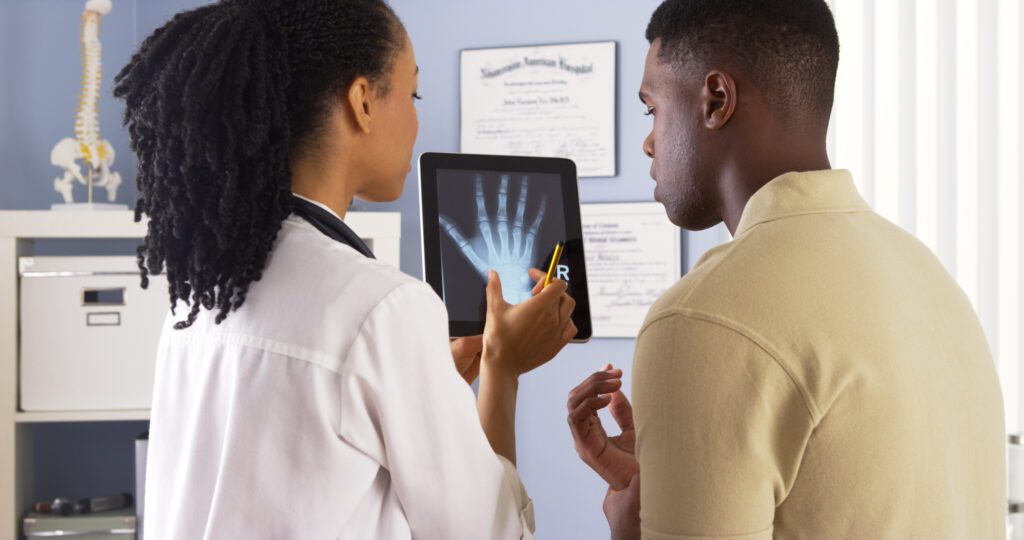
Imaging gives your doctor a look inside your body that a physical exam alone can’t provide. Scans can show fractures, disc injuries, torn ligaments, swelling and bleeding, and they create a lasting record of what was found.
After your scan, a radiologist reviews the images and writes a report describing what’s present, where it is and how severe it appears. When it’s possible to tell, the report may also note whether a finding looks recent or long-standing. If you need follow-up scans, comparing them over time shows how your injury is healing or changing, which helps guide your treatment plan.
How Imaging Can Support Insurance and Legal Claims
Insurance companies and attorneys look closely at medical records when they review a personal injury claim. Imaging reports are an important part of those records because they show what’s happening inside your body in an objective way.
For Insurance Claims
Imaging can help show that an injury exists, how serious it is and what treatment it may need. Combined with your doctor’s exam and treatment notes, it helps give an insurer a fuller picture of your injury, which can make it harder to dismiss or undervalue.
If Your Case Goes to Court
If a personal injury case goes to court, attorneys may use imaging to help judges and juries understand an injury that would be hard to describe with words alone. A picture of a herniated disc or a fracture is often easier to understand than a written description. Doctors and other medical experts can then explain what the images show and what the injury may mean for your future health.
Imaging is one piece of evidence. Your doctor’s evaluation, your treatment history and your attorney’s guidance all play a role in how a claim is decided.
What Imaging Can’t Show
Imaging is a powerful tool, but it has limits:
- A normal scan doesn’t always mean you’re not hurt. Many muscle strains, whiplash injuries and concussions don’t show up on standard X-rays, CT or MRI. Your symptoms and your doctor’s exam still matter.
- Scans can show older changes. Many adults have wear-and-tear changes in their spine or joints that existed before an accident. Your doctor and radiologist will consider your history when reviewing your images.
- Imaging doesn’t show pain. Scans show structure, not how much an injury hurts or how it affects your daily life. Your medical records and your own account fill in that part of the picture.
Getting Imaging for a Personal Injury at American Health Imaging
When your doctor orders imaging after an accident, American Health Imaging helps you get answers quickly:
- Same-day appointments are available, and extended and weekend hours are offered at select locations.
- Faster scanning MRI technology, available at many of our locations, reduces many scan times to as little as 8 minutes, which is easier when you’re in pain.
- A board-certified, subspecialized radiologist reads your exam, and you’ll receive a Scanslated® report by text within 48 hours after your report is finalized.
- Our imaging costs up to 60% less than hospital imaging, and we’re in-network with 99% of major insurance plans.
When you request an appointment, let us know if your scan is related to a personal injury case or workers’ compensation claim so our team can route it correctly. Learn more about how scheduling works.
If you’re an attorney or provider, American Health Imaging’s personal injury team works with attorneys and providers across Georgia, South Carolina and Texas. Connect with our team to learn more.
Schedule Your Imaging Appointment
If you’ve been injured, don’t wait for symptoms to get worse. Talk to your doctor about whether imaging is right for you, then request an appointment or find an imaging center near you. With a 97% patient satisfaction rating, our team is here to help you get the answers you need.
Frequently Asked Questions About Imaging After a Personal Injury
Get emergency care right away for severe symptoms. Otherwise, see your doctor within a few days of your accident, or sooner if new pain, numbness or headaches develop, and get any recommended imaging promptly.
Yes. A doctor's order is required for medical imaging. It tells your imaging team which exam to perform and which area to scan.
X-rays mainly show bones. An MRI shows soft tissue, such as discs, nerves, ligaments and muscles, so it can find injuries an X-ray can't. Your doctor may order an MRI if your pain continues after a normal X-ray.
A standard brain MRI often looks normal after a concussion. Advanced tools such as Diffusion Tensor Imaging (DTI) and NeuroQuant® can provide more detail when your doctor orders them. These are available at select American Health Imaging centers.
Sometimes. Certain findings, such as swelling or bone bruising, can suggest a recent injury, while others point to long-term wear and tear. Your doctor and radiologist will consider your history when reviewing your images.
Yes. Attorneys can contact our personal injury team, which works with attorneys and providers across Georgia, South Carolina and Texas, through our attorney and provider inquiry page.
American Health Imaging has centers in Alabama, Georgia, Tallahassee, FL, Beaumont, TX, San Antonio, TX and South Carolina. Services vary by center, so call ahead to confirm your exam is available.